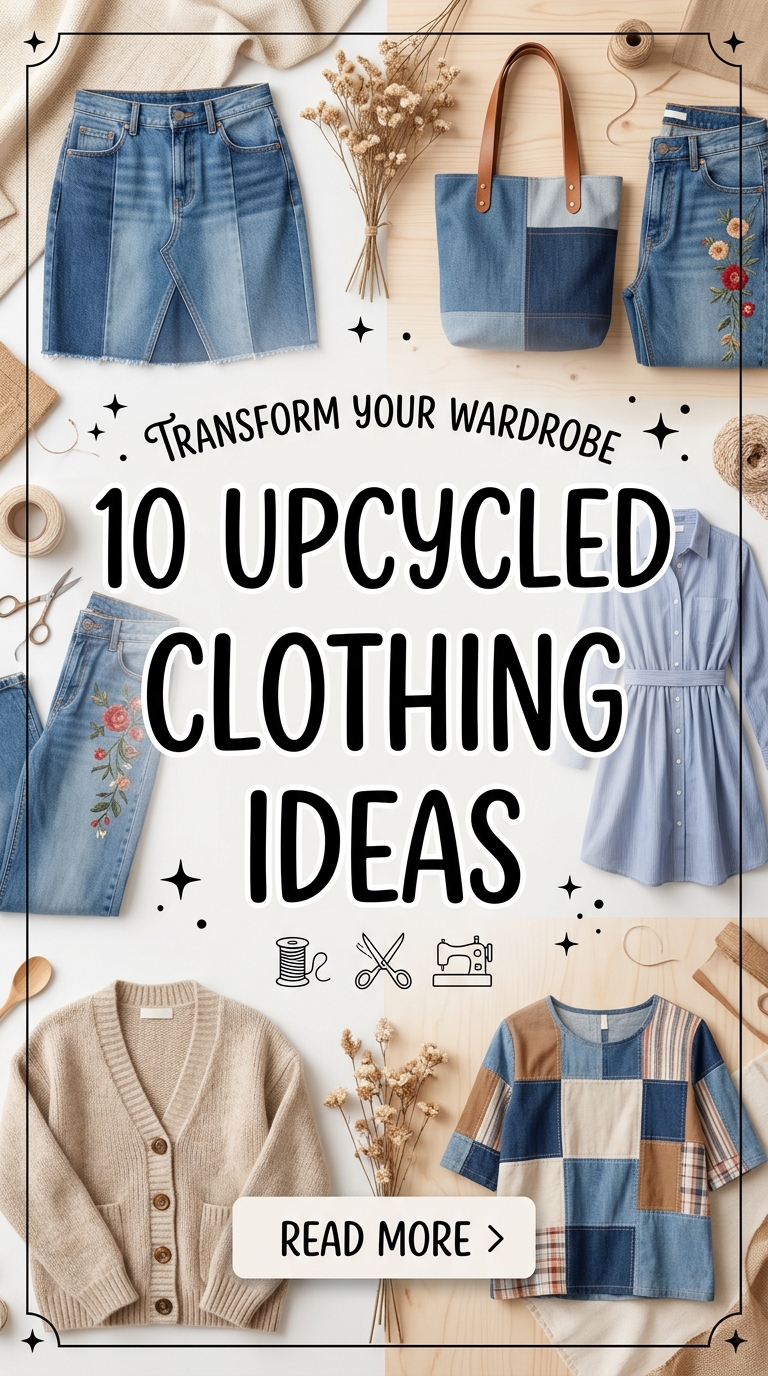
10 Upcycled Clothing Ideas
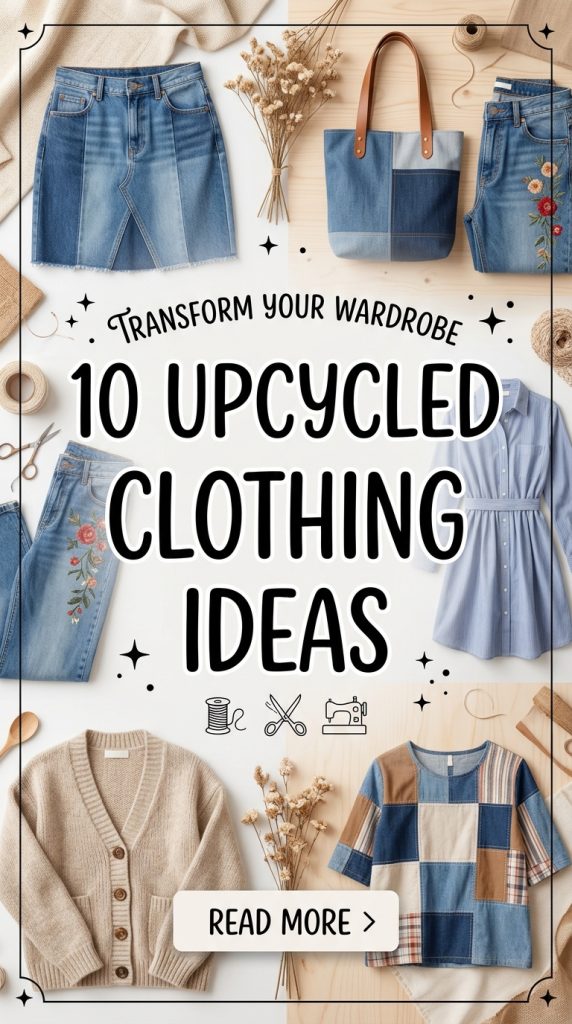
Upcycled clothing offers a practical and creative way to refresh old garments instead of discarding them. By transforming existing clothing into stylish, functional, or decorative pieces, anyone can reduce textile waste while creating unique handmade items. Pinterest ideas frequently feature clothing upcycling because these projects combine sustainability, creativity, and affordability without requiring advanced sewing experience. From redesigning worn denim to turning oversized shirts into fashionable accessories, there are countless ways to extend the life of everyday clothing. This guide presents ten beginner friendly DIY ideas that focus on realistic techniques, clear planning, and attractive results. Each project explains practical methods that help create modern design elements while encouraging thoughtful use of available materials. Whether updating a wardrobe or making home decor accents, these creative projects provide useful inspiration for anyone interested in handmade clothing transformations.
Why This Idea Is Trending or Useful
Upcycled clothing continues to appear among trending Pinterest ideas because it combines environmental awareness with personal creativity. Many wardrobes contain garments that no longer fit, have small imperfections, or simply no longer match current preferences. Instead of replacing these items, DIY projects allow them to become practical accessories, decorative pieces, or redesigned clothing. Most projects require only basic sewing supplies, simple cutting tools, and careful planning, making them accessible for beginners. Upcycling also allows every finished item to become one of a kind because fabric colors, textures, and patterns naturally vary. These projects encourage thoughtful organization, reduce unnecessary waste, and support budget ideas by giving existing materials a second purpose. Their versatility makes them suitable for modern design, minimalist style, rustic decor, and personalized fashion inspiration.
Materials and Preparation
Preparing materials before starting any upcycled clothing project improves efficiency and helps produce cleaner finished results. Gather old shirts, jeans, sweaters, dresses, or jackets along with fabric scissors, sewing needles, matching thread, measuring tape, straight pins, fabric chalk, ruler, ironing board, sewing machine if available, fabric glue for no-sew projects, and decorative trims if desired. Wash and iron every garment before making any changes so measurements remain accurate throughout the process. Examine each piece for stains, holes, or worn sections and plan designs around usable fabric. Sketch simple layouts before cutting to reduce waste and improve organization. Keeping tools arranged within easy reach creates a smoother workflow and allows beginners to complete each creative project confidently while producing attractive handmade items suitable for Pinterest inspiration.
Idea 1: Denim Tote Bag from Old Jeans
How to Create
Transform worn denim jeans into a sturdy tote bag that is useful for shopping, books, or everyday organization. Begin by cutting away the legs while preserving the upper portion of the jeans. Sew the leg openings closed securely to create the bottom of the bag, reinforcing corners with extra stitching for durability. Use fabric from the removed pant legs to create matching handles that are stitched firmly to the waistband area. Add inside pockets using leftover denim pieces to improve storage and organization. Decorative topstitching can enhance the appearance while preserving the rugged character of denim. This beginner friendly DIY project requires only basic sewing skills and produces a practical handmade accessory suitable for daily use. The finished tote combines sustainability, functionality, and modern design while reflecting popular Pinterest ideas for creative clothing reuse.

Idea 2: Oversized Shirt Apron
Step-by-Step Guide
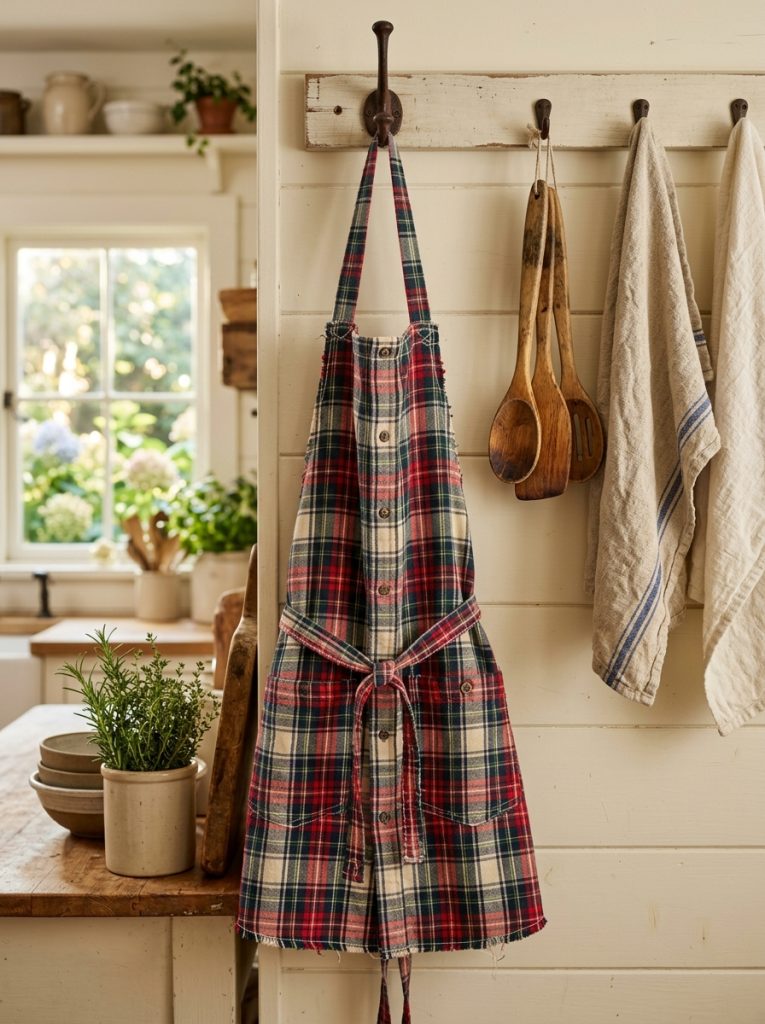
An oversized button-up shirt can easily become a comfortable kitchen or craft apron with only a few modifications. Lay the shirt flat and trim away unnecessary sections while preserving the front button closure. Shape the sides gradually for a better fit and use sleeve fabric to create waist ties if needed. Finish exposed edges with simple hemming to improve durability and prevent fraying. The original collar and buttons provide a finished appearance without additional decoration. Large front pockets remain useful for holding cooking utensils, gardening tools, or craft supplies. This easy project demonstrates how existing clothing can be adapted into practical household items while requiring minimal materials. The completed apron reflects creative DIY inspiration and provides a budget friendly solution for everyday activities.
Idea 3: Sweater Cushion Cover
How to Make
Old knit sweaters can become soft decorative cushion covers that add warmth and texture to home decor. Select a sweater with attractive knit patterns and place a cushion insert over the fabric to determine cutting dimensions. Leave extra fabric around all sides for seam allowances before cutting. Sew the front and back pieces together while preserving the sweater’s natural stretch. Reuse ribbed cuffs or hems as decorative closures when possible to simplify construction. Carefully reinforce seams to prevent stretching during use. Neutral-colored sweaters complement minimalist style, while colorful patterns create seasonal decoration for living rooms or bedrooms. This handmade project is beginner friendly and demonstrates how worn clothing can become attractive interior accessories using simple sewing techniques and thoughtful planning.

Idea 4: Fabric Basket from T-Shirts
Setup Method
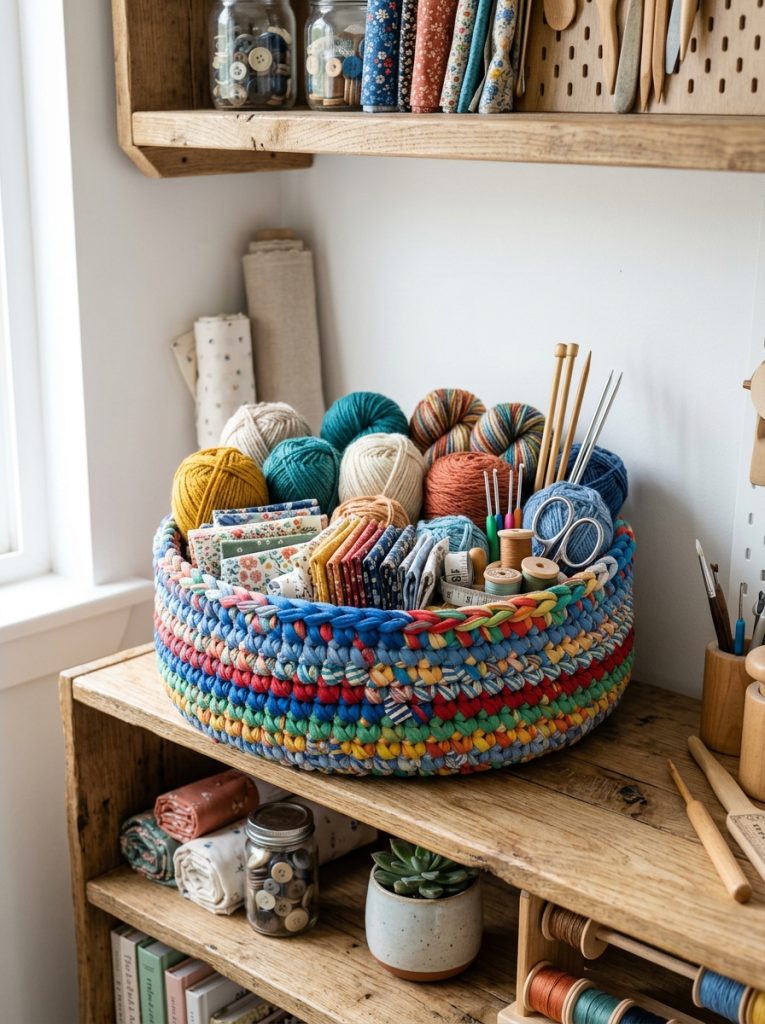
Soft cotton T-shirts can be transformed into flexible fabric baskets suitable for organizing small household items. Cut several shirts into continuous fabric strips of equal width and stretch them gently so the edges curl naturally. Braid three strips together until reaching the desired length, then coil the braid into a circular base while securing it with sturdy stitching. Continue wrapping and sewing additional braided rows upward to build the basket walls gradually. Reinforce the rim with extra stitching for improved strength and shape. These baskets are ideal for storing craft supplies, toiletries, toys, or office accessories while adding handmade charm to shelves and desks. The project encourages creative reuse of basic materials while producing functional organization inspired by Pinterest DIY tutorials.
Idea 5: Patchwork Scarf from Fabric Scraps
Execution Process
Leftover clothing fabric can become a colorful patchwork scarf that combines comfort with creative design. Gather compatible fabrics from shirts, dresses, or lightweight sweaters and trim them into matching rectangles or squares. Arrange the pieces before sewing to achieve balanced color distribution and coordinated patterns. Stitch each section together using straight seams and press the finished rows flat before assembling the entire scarf. Add a soft backing fabric if extra warmth or stability is desired. Decorative fringe created from leftover strips provides additional texture without requiring extra materials. This beginner friendly project demonstrates how even small fabric scraps can become practical accessories while reducing waste. The completed scarf reflects handmade craftsmanship and fits naturally into Pinterest inspiration for sustainable fashion.

Idea 6: Decorative Plant Hanger from Jeans
How to Create
Repurpose denim pant legs into durable hanging plant holders suitable for indoor greenery. Cut long strips from old jeans and braid or weave them into strong cords capable of supporting lightweight plant pots. Tie secure knots at measured intervals to create a balanced hanging structure that distributes weight evenly. Decorative stitching or contrasting fabric accents can personalize the finished design while maintaining functionality. Test the hanger using an empty pot before placing live plants inside to confirm stability. This easy project combines practical home decor with creative organization while extending the usefulness of worn denim. The finished hanger complements rustic, industrial, and modern interiors while highlighting handmade craftsmanship inspired by trending Pinterest ideas.

Idea 7: Reversible Fabric Headband
Step-by-Step Guide
Create a comfortable reversible headband using soft fabric from old shirts or dresses. Select two coordinating fabrics and cut matching strips using a simple template to maintain consistent width. Place the fabrics right sides together and sew around the edges, leaving a small opening for turning. Turn the fabric right side out, press it flat, and close the remaining opening with neat hand stitching. Twist the center before securing it if a knotted style is preferred. Because both sides remain visible during wear, choosing complementary colors creates greater versatility. This project requires only small fabric pieces, making it ideal for using leftover scraps while producing a practical everyday accessory suitable for beginners and DIY enthusiasts alike.

Idea 8: Shirt Pocket Wall Organizer
How to Make
Old shirt pockets can become a practical wall organizer for craft rooms, entryways, or home offices. Carefully remove pockets from unused shirts while preserving their original stitching. Arrange multiple pockets on a sturdy fabric backing or canvas before attaching them with reinforced seams. Vary the pocket sizes to store pens, scissors, mail, notebooks, or small tools efficiently. Decorative stitching around the edges strengthens the organizer while adding subtle visual detail. Mount the finished piece using a wooden dowel or simple hanging loops. This creative project improves organization while making effective use of clothing sections that might otherwise be discarded. The finished organizer combines functionality with handmade decoration suitable for modern home decor.

Idea 9: Braided Rug from Old T-Shirts
Setup Method
Transform worn cotton T-shirts into a comfortable braided rug suitable for bedrooms, reading corners, or laundry rooms. Cut each shirt into long continuous strips and stretch them gently to create rounded fabric cords. Braid three strips together and coil the braid into a spiral while securing every section with strong stitching. Continue adding new strips as needed until reaching the preferred rug size. Maintain consistent braid tension throughout the process to create a flat surface that sits evenly on the floor. Mixing complementary colors creates attractive patterns while preserving a cohesive appearance. This handmade project uses simple techniques that beginners can master while producing practical home decor inspired by creative Pinterest ideas.

Idea 10: Denim Storage Pocket Organizer
Execution Process
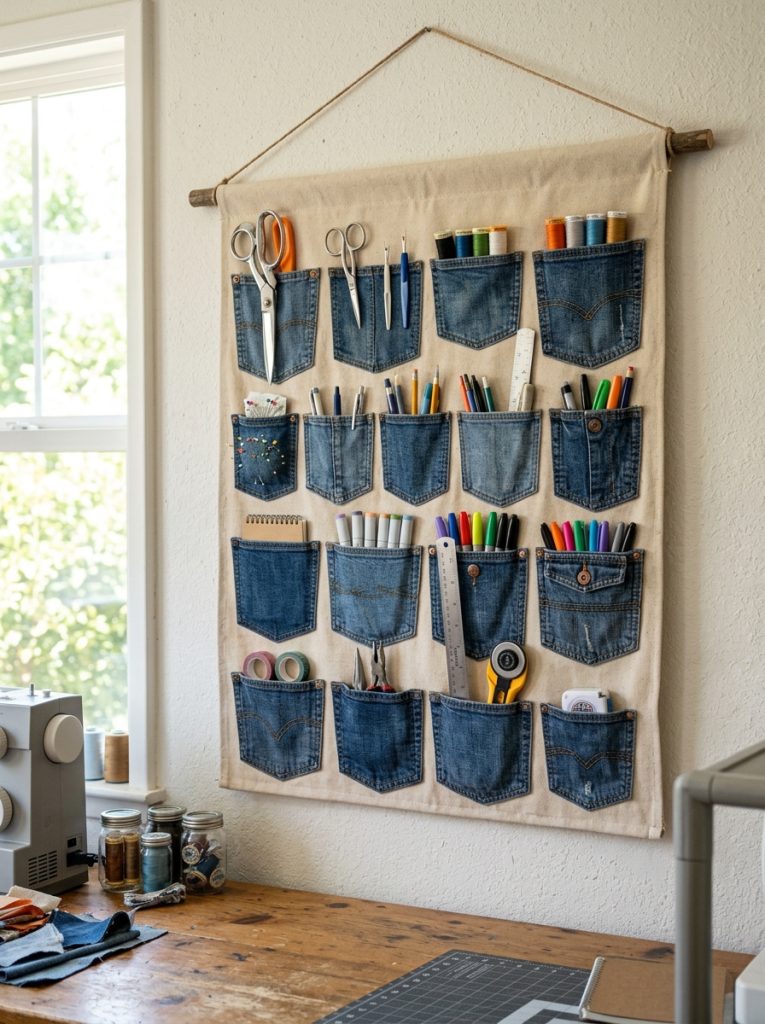
Convert the pocket sections from old jeans into a durable hanging storage organizer for workshops, bedrooms, or craft spaces. Remove several pockets carefully while preserving the surrounding stitching for strength. Attach them evenly to a sturdy canvas backing using reinforced seams, leaving enough spacing to access stored items comfortably. Different pocket sizes can organize tools, sewing supplies, gardening accessories, or stationery. Add hanging loops or a wooden support rod across the top for secure wall mounting. Decorative topstitching with contrasting thread highlights the original denim details while maintaining a clean appearance. This beginner friendly project combines organization with creative reuse and demonstrates how even small sections of old clothing can become functional handmade storage solutions.
Common Beginner Mistakes and How to Avoid Them
Many beginners begin cutting garments without first checking fabric condition, resulting in unusable project pieces. Always inspect clothing for stains, excessive wear, or weak seams before planning your design. Another common mistake is ignoring seam allowances, which can produce items that are too small after sewing. Measuring carefully and marking cutting lines with fabric chalk improves accuracy throughout the project. Skipping ironing also affects precision because wrinkled fabric shifts during cutting and stitching. Work slowly, test layouts before permanent assembly, and save leftover fabric for future creative ideas. These habits improve organization while helping every DIY tutorial produce cleaner, longer-lasting handmade results.
Practical Tips for Better Results
Separate clothing by fabric type before beginning so similar materials work together more easily during sewing and assembly. Use sharp fabric scissors to create smooth edges that reduce fraying and improve presentation. Reinforce areas that will receive frequent use, such as bag handles, basket rims, or organizer pockets, with extra stitching. Press seams after every construction step to keep projects neat and easier to assemble. Store leftover buttons, zippers, and fabric scraps in labeled containers for future DIY inspiration. Organized materials and careful planning consistently improve craftsmanship while making every creative project more enjoyable for beginners.
Styling, Presentation, or Organization Ideas
Display finished upcycled projects thoughtfully to emphasize their handmade character and practical value. Denim tote bags pair well with neutral entryway storage, while sweater cushion covers create cozy living room arrangements alongside simple blankets and natural wood furniture. Fabric baskets grouped together on shelves improve organization while adding coordinated texture. Wall organizers become more attractive when arranged neatly with matching office or craft supplies. Combining similar colors across multiple projects creates visual harmony that complements minimalist style and modern home decor. These presentation techniques help handmade creations appear polished while providing fresh Pinterest ideas for functional decoration.
Budget or Time Planning
Upcycled clothing projects are among the most affordable DIY activities because the primary materials already exist in many households. Most projects require only basic sewing supplies, making them suitable for budget ideas without significant additional expense. Smaller accessories such as headbands or organizers can often be completed within one hour, while larger projects like rugs or tote bags require additional time for cutting and assembly. Preparing materials before beginning reduces interruptions and improves efficiency. Completing several similar tasks together, such as cutting fabric strips or organizing reusable notions, also saves valuable time throughout the creative process while reducing material waste.
Creative Expansion and Advanced Inspiration
After mastering simple clothing transformations, experiment with combining different fabrics, textures, and techniques into larger coordinated collections. Denim bags can match storage organizers, while patchwork cushions complement braided rugs made from similar color palettes. Mixing embroidery, quilting, fabric weaving, or decorative stitching introduces additional visual interest without greatly increasing project complexity. Seasonal color combinations also allow handmade creations to coordinate with changing home decor throughout the year. Keeping sketches, measurements, and successful techniques in a crafting notebook helps improve future DIY tutorials and encourages continued creativity. These advanced approaches demonstrate how thoughtful planning and sustainable practices can transform ordinary clothing into distinctive handmade pieces inspired by modern Pinterest trends.