10 Reading Nook Ideas For Kids
Reading nooks for kids combine comfort, creativity, and organization to create inviting spaces that encourage reading and quiet learning activities. These cozy areas have become popular Pinterest ideas because they help transform ordinary corners into imaginative environments designed specifically for children. A well-designed reading nook provides a calm location where kids can read books, relax, draw, or enjoy quiet independent time away from distractions. These setups often include soft seating, practical storage, playful decoration, and warm lighting that support both comfort and accessibility. Reading spaces for children can fit easily into bedrooms, playrooms, classrooms, or small family living areas without requiring major renovations. This article explores ten beginner friendly reading nook ideas for kids using practical layouts, creative inspiration, and realistic step by step planning methods. Each design balances functionality, safety, and aesthetic home decor while remaining adaptable for different ages, room sizes, and interior styles.
Why Kids Reading Nooks Are Trending
Kids reading nooks continue trending because many parents and educators want spaces that encourage reading habits while supporting creativity and independent learning. Pinterest inspiration frequently highlights child-friendly environments that feel both functional and visually engaging, making reading corners especially popular for modern home decor and classroom organization. These spaces are practical because they create dedicated quiet areas without requiring entire rooms for study or relaxation. Many families also appreciate that reading nooks can be created using simple DIY materials, secondhand furniture, and affordable decorative accessories. Soft textures, playful colors, and organized book storage help children feel comfortable while making books easier to access. Their flexibility also contributes to their popularity because reading nooks can match different themes such as minimalist style, woodland decor, rainbow aesthetics, or modern design. This combination of comfort, accessibility, and creative decoration explains why these ideas remain highly saved across Pinterest and family home inspiration boards.
Materials and Preparation
Preparing a reading nook carefully helps create a safe, comfortable, and practical environment suitable for children of different ages. Begin by selecting a quiet area with enough natural or artificial light for reading activities. Common materials include floor cushions, bean bags, soft rugs, small shelves, blankets, baskets, and warm lighting fixtures. Low storage solutions work especially well because children can access books independently without assistance. Before arranging furniture, measure the available space carefully to maintain safe movement throughout the room. Choose soft fabrics and rounded furniture edges to improve comfort and reduce potential hazards. Washable materials are also useful because they simplify cleaning and maintenance over time. Decorative items such as wall art, canopies, fairy lights, or themed pillows help personalize the space while maintaining organization. Careful planning allows the finished creative project to feel inviting, functional, and visually connected to the surrounding room decor.
Idea 1: Cozy Tent Reading Nook
How to Create
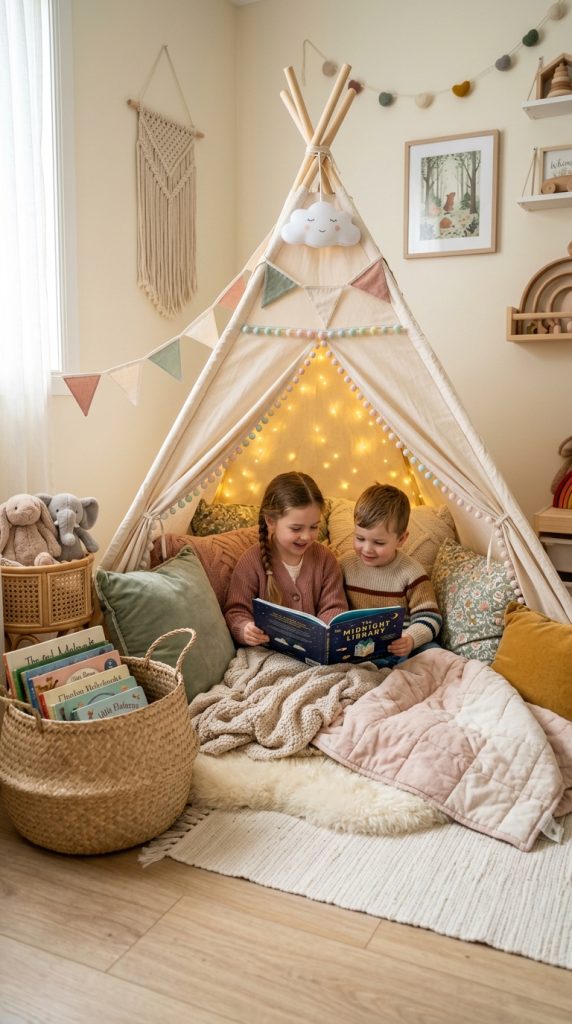
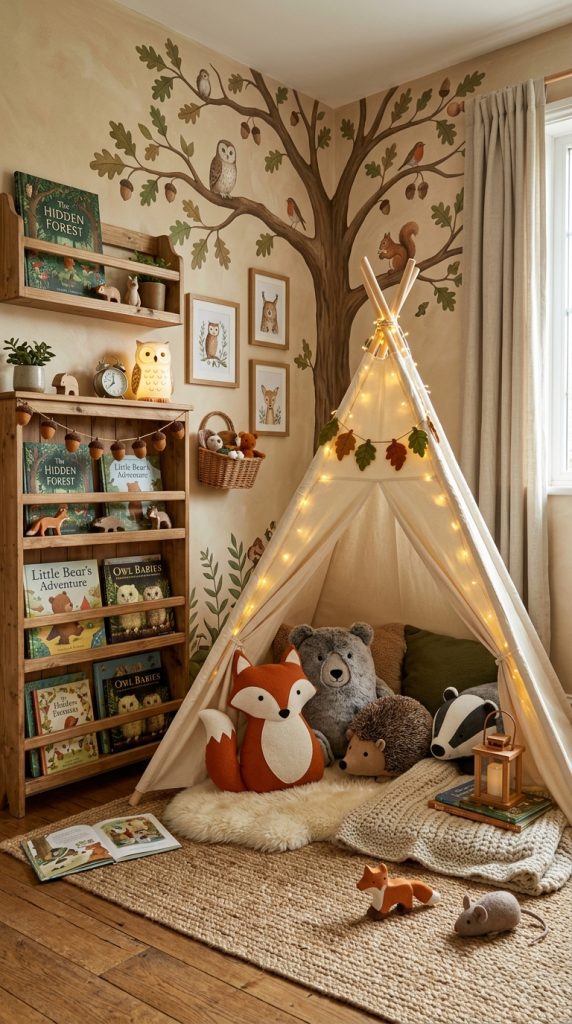
A tent reading nook creates a playful and calming environment that feels private and comfortable for children while supporting quiet reading habits. Begin by placing a small indoor play tent or fabric canopy in a quiet corner of the bedroom or playroom. Add layered floor cushions, soft blankets, and oversized pillows inside the tent to create a cozy seating area suitable for long reading sessions. Use battery-powered string lights or warm LED lighting to improve visibility while maintaining a gentle atmosphere. Place a low basket or small shelf nearby to organize books within easy reach. Neutral fabrics, pastel tones, or woodland-themed decoration work especially well for creating a balanced and relaxing aesthetic. This beginner friendly DIY setup requires minimal materials while offering strong visual appeal and practical comfort. The enclosed design also helps reduce distractions, making it easier for children to focus on reading, drawing, or quiet independent play activities.

Idea 2: Window Seat Reading Corner
Step-by-Step Guide
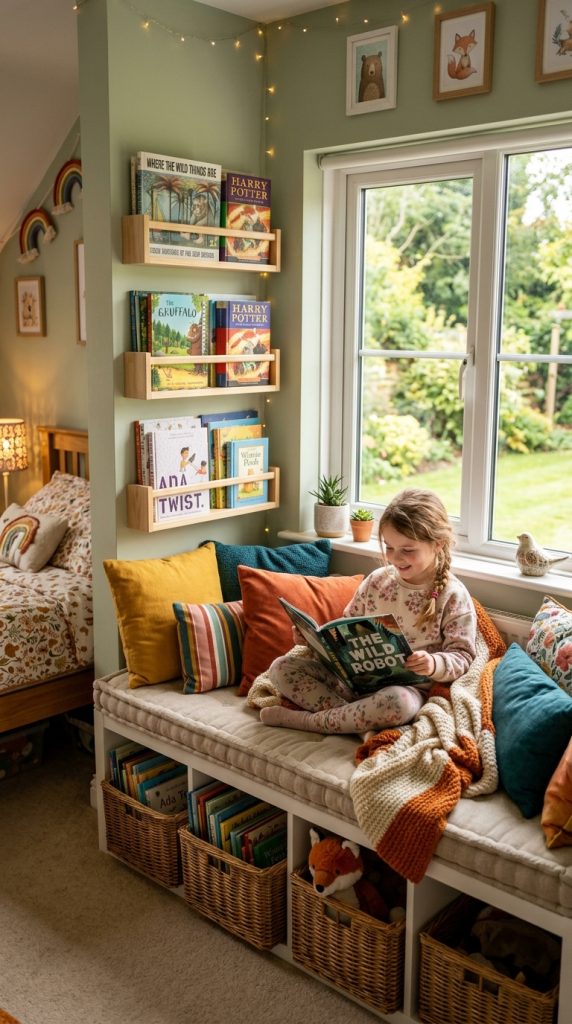
A window seat reading nook uses natural light and soft seating to create a peaceful reading environment suitable for children of different ages. Begin with a cushioned bench or storage ottoman placed beneath a window that receives steady daylight throughout the day. Add colorful pillows and lightweight blankets to increase comfort while introducing playful texture into the space. Floating shelves installed beside the window help organize books without taking additional floor space. Soft curtains or sheer panels can filter sunlight gently while maintaining brightness inside the nook. Decorative wall art, small plants, or themed cushions help personalize the setup without overcrowding the area visually. This easy project works especially well in bedrooms and playrooms where natural light improves both reading comfort and overall atmosphere. The final design feels organized, bright, and inviting while encouraging children to spend more time reading independently.
Idea 3: Floor Cushion Story Corner
How to Make
A floor cushion reading nook creates a relaxed and flexible environment that works well in compact rooms and shared play areas. Begin by layering a soft rug with oversized floor cushions, poufs, or bean bags placed against a wall or corner space. Add textured blankets and supportive pillows to create a warm and comfortable seating arrangement suitable for reading, storytelling, or quiet play. Low wooden crates or woven baskets help organize books while maintaining accessibility for younger children. Soft wall decals, simple artwork, or fairy lights introduce decorative personality without creating visual clutter. Bright but balanced colors such as soft blue, mustard, sage green, or pastel pink help maintain an inviting atmosphere. This beginner friendly setup requires very few materials while providing a highly adaptable reading space that can evolve easily as children grow and their interests change over time.
Idea 4: Built-In Bookshelf Reading Nook
Execution Process

A built-in bookshelf reading nook combines seating and book storage into one organized and highly functional design. Start by placing a cushioned bench or small reading chair beside a low bookshelf or built-in shelving unit. Arrange books neatly at child-friendly heights so children can browse and select stories independently. Add seat cushions and layered pillows to improve comfort while creating a cozy atmosphere for reading and quiet learning activities. Warm lighting from a wall lamp or nearby floor lamp improves visibility during evening reading sessions without overwhelming the space. Decorative accessories should remain simple and practical to preserve organization while still adding personality through color and texture. Neutral wood finishes and soft fabrics help create a calm environment suitable for both modern design and playful children’s decor themes. This creative project works especially well for bedrooms, study spaces, and shared family reading areas.
Idea 5: Canopy Reading Hideaway
How to Create
A canopy reading nook creates a soft and imaginative retreat that feels comfortable and visually calming for children. Begin by hanging a lightweight fabric canopy from the ceiling above a floor cushion arrangement or compact seating area. Add plush pillows, blankets, and a textured rug underneath to create a layered and inviting reading surface. String lights or soft wall lighting help create a warm atmosphere without becoming overly bright or distracting. Use nearby baskets or floating shelves to organize books while keeping the layout tidy and accessible. Neutral tones, soft pastel colors, or nature-inspired decorative themes work especially well for maintaining a peaceful aesthetic. This easy project requires simple materials while producing a highly aesthetic Pinterest-inspired reading space that encourages relaxation, creativity, and independent reading routines for children of many different ages.

Idea 6: Under-Stair Reading Retreat
Setup Method
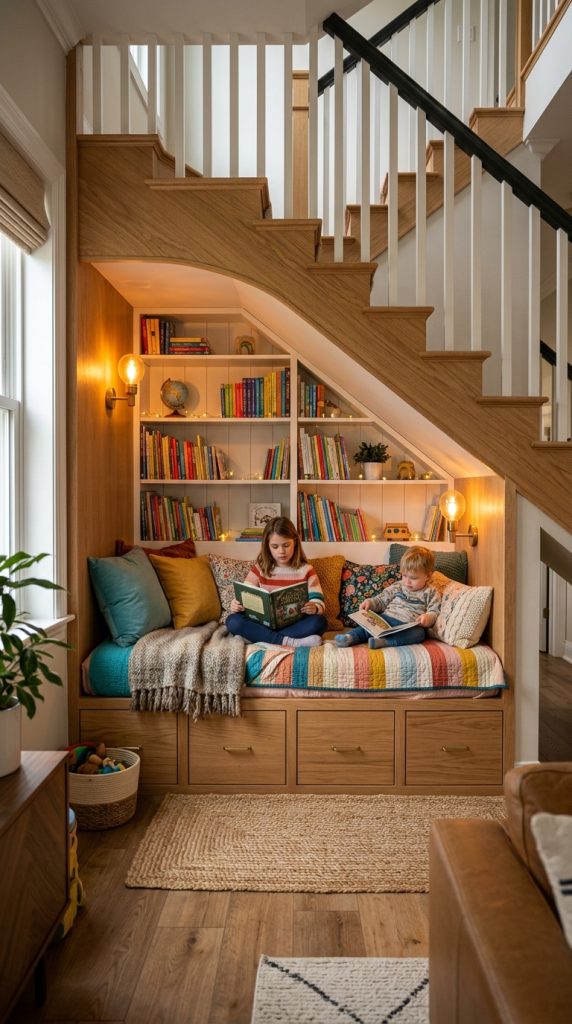
An under-stair reading nook transforms unused architectural space into a practical and comfortable retreat designed specifically for kids. Begin by clearing the area beneath the staircase and measuring the available dimensions before selecting seating. A built-in bench with hidden storage works especially well because it improves organization while maximizing limited space. Add soft cushions, blankets, and warm lighting to create a welcoming environment suitable for reading and quiet activities. Wall-mounted shelves provide additional book storage without reducing seating space. Light paint colors and simple decorative details help the nook feel more open while maintaining a playful atmosphere. This beginner friendly setup demonstrates how overlooked home areas can become highly functional creative projects through thoughtful planning and organization. The result feels cozy, safe, and visually interesting while supporting regular reading habits and independent play.
Idea 7: Small Bedroom Reading Spot
How to Make
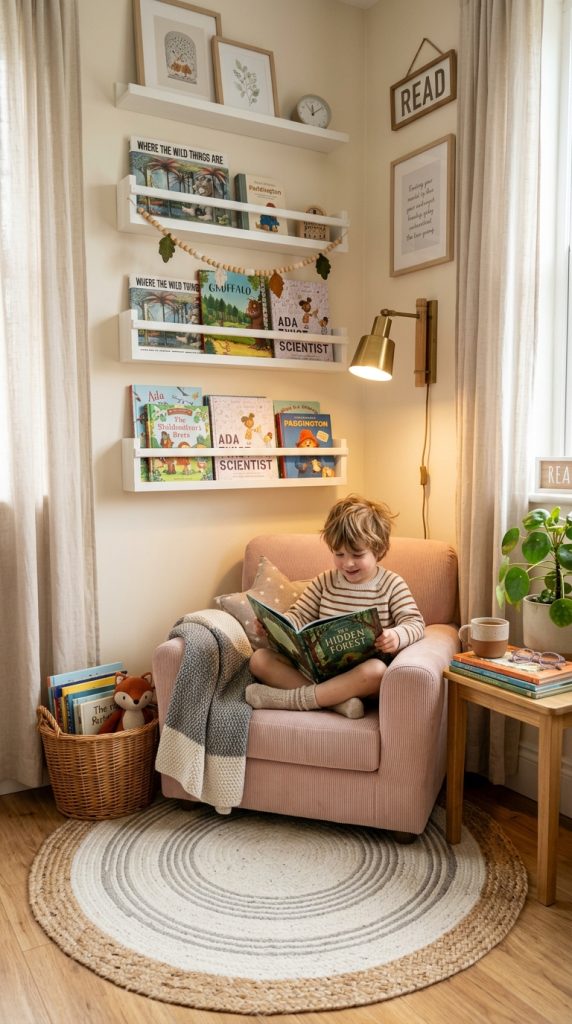
A bedroom reading nook helps create a calm and organized corner within children’s bedrooms without taking excessive space away from sleeping or play areas. Select a compact chair, bean bag, or floor cushion setup positioned near a wall or window corner. Add a small side table or low basket for books and drawing supplies while maintaining enough open floor space for movement. Wall-mounted lighting or clip-on reading lamps are especially useful because they reduce clutter and improve visibility for evening reading. Soft bedding textures, layered pillows, and coordinated color palettes help connect the nook visually with the rest of the room decor. Floating shelves above the seating area provide practical organization while preserving valuable floor space. This creative project works especially well for apartments and smaller homes where multifunctional room planning is important for maintaining comfort and organization.

Idea 8: Rainbow-Themed Reading Nook
Step-by-Step Guide
A rainbow-themed reading nook introduces playful color and cheerful decoration while maintaining a functional and organized reading environment. Begin with a neutral seating base such as a bean bag or cushioned bench, then layer colorful pillows and rugs to create visual interest throughout the space. Rainbow wall decals, framed prints, or painted shelving help establish the theme without overwhelming the room. Organize books in color-coordinated baskets or low shelves to improve accessibility while strengthening the decorative concept. Warm lighting and soft textures help balance the brighter colors so the nook remains calming rather than overstimulating. This beginner friendly DIY setup works especially well for playrooms, bedrooms, and homeschool spaces where creativity and visual engagement are important. The final result feels energetic, organized, and highly aesthetic while encouraging children to spend more time reading and exploring books independently.
Idea 9: Montessori-Inspired Reading Area
Execution Process
A Montessori-inspired reading nook focuses on accessibility, independence, and simplicity while supporting calm learning environments for children. Begin by placing low open shelves along a wall so books remain fully visible and easy for children to reach independently. Add a soft floor mat, bean bag, or low chair positioned near the shelves to create a comfortable reading area. Neutral colors and natural materials such as wood, cotton, and woven baskets help maintain a calm and organized atmosphere. Decorative elements should remain simple and purposeful rather than visually overwhelming. Proper lighting is especially important because children should feel comfortable reading during different times of day without eye strain. This practical setup method supports organization, independence, and focused reading habits while remaining highly adaptable for toddlers, preschoolers, and older children within both small and large room layouts.
Idea 10: Closet Reading Nook Transformation
How to Create
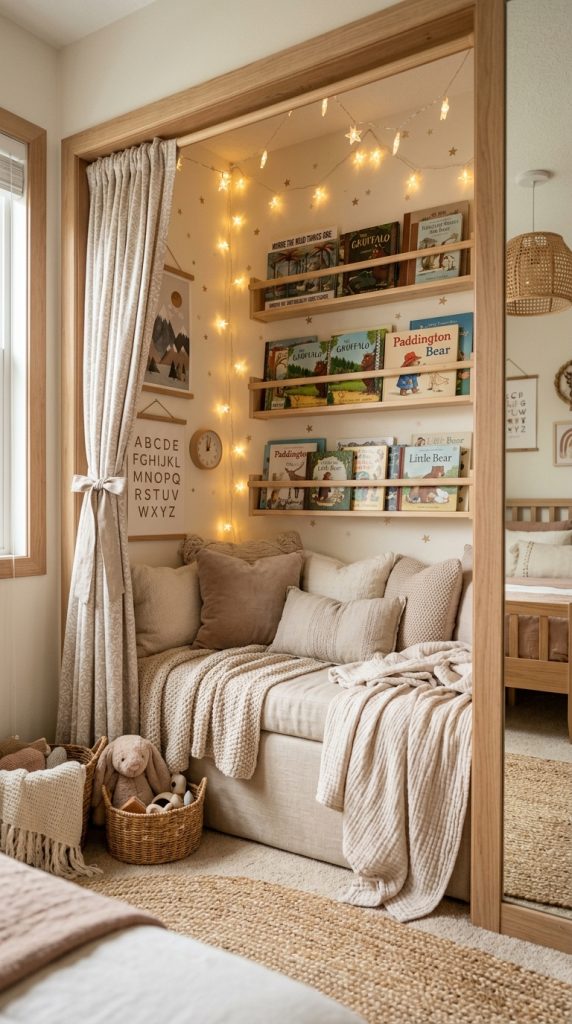
An unused closet can become a highly functional reading nook when organized carefully with comfort and accessibility in mind. Begin by removing unnecessary storage items and cleaning the area thoroughly before adding seating. A floor cushion arrangement, compact bench, or small mattress works especially well because it maximizes comfort inside the limited layout. Install floating shelves along the walls to organize books while preserving floor space for seating and movement. Soft lighting, layered pillows, and lightweight blankets help create a warm atmosphere suitable for quiet reading and relaxation. Light paint colors or wallpaper can make the nook feel brighter and more visually open despite the enclosed structure. Curtains or sliding doors allow the space to remain partially hidden when not in use while maintaining organization within the room. This creative project offers excellent inspiration for maximizing overlooked spaces inside compact homes.
Common Beginner Mistakes and How to Avoid Them
One common mistake when creating kids reading nooks involves prioritizing decoration over comfort, resulting in spaces that appear attractive but feel impractical for daily use. Poor lighting is another frequent issue because dim reading corners can cause eye strain and reduce usability. Many beginners also overcrowd the space with excessive toys and accessories, making the nook feel cluttered instead of calming. Ignoring accessible storage often leads to scattered books and disorganization that discourages independent reading habits. Selecting furniture without measuring carefully may also create balance problems inside smaller rooms or shared spaces. To avoid these issues, focus first on comfortable seating, proper lighting, and child-friendly organization before adding decorative details. Maintaining a clean and practical layout creates a more successful reading environment that supports both relaxation and creativity.
Practical Tips for Better Results
Soft textures such as blankets, rugs, and oversized cushions help create warmth and comfort while improving the overall reading experience for children. Position reading nooks near natural light whenever possible because daylight supports better visibility and creates a calmer atmosphere. Warm-toned lighting fixtures work best for evening reading because they reduce harsh glare and maintain a cozy environment. Storage baskets and low shelves improve organization while keeping books accessible for independent use. Neutral base colors combined with a few playful accents create visual balance without overwhelming the room. Rotating books and decorative details occasionally also helps maintain interest and encourages regular reading habits. Consistent organization and thoughtful planning allow children’s reading nooks to remain functional, comfortable, and visually appealing over time.
Styling, Presentation, or Organization Ideas
Thoughtful styling helps kids reading nooks feel inviting while preserving practical organization throughout the room. Layered fabrics, natural wood textures, and woven baskets create warmth while supporting easy storage for books and blankets. Decorative shelves should combine books with only a few carefully selected accessories such as framed prints, soft toys, or simple wall art. Themed color palettes such as woodland tones, pastel shades, or rainbow accents help create cohesive visual presentation without excessive clutter. Lighting should remain soft and evenly distributed throughout the nook to maintain a relaxing atmosphere suitable for reading and quiet play. Organized layouts with open pathways and accessible storage improve safety while encouraging children to use the space independently. Balanced decoration creates a calm and aesthetic environment that supports long-term comfort and daily reading routines.
Budget or Time Planning
Kids reading nooks can be created affordably because many projects use simple furniture and existing household materials rather than custom-built installations. Basic setups often require only cushions, blankets, shelving, and warm lighting, making them accessible for families working with limited budgets. Small-space reading corners can usually be assembled within one day once measurements and furniture placement are planned carefully. Repurposing baskets, floor cushions, or storage benches helps reduce costs while supporting sustainable DIY organization methods. More advanced projects such as built-in seating or closet transformations may require additional time and preparation. Planning materials and layouts before purchasing decorative accessories prevents unnecessary spending and overcrowding. These budget ideas allow parents and caregivers to create practical and aesthetic reading environments without major renovation costs.
Creative Expansion and Advanced Inspiration
Once a simple reading nook is established, additional creative ideas can improve functionality, organization, and visual appeal over time. Built-in storage benches, wall murals, and integrated lighting systems create more personalized and immersive reading environments for children. Some families expand reading corners into multipurpose learning spaces that include art supplies, writing stations, or sensory activities. Seasonal decoration updates also help keep the nook visually fresh while maintaining the original layout structure. Natural textures such as wood, linen, and woven materials add warmth while preserving a balanced aesthetic suitable for modern design and handmade decor themes. Advanced planning techniques including custom shelving and hidden storage allow reading nooks to evolve into fully integrated room features that support long-term creativity, comfort, and independent learning habits.