10 Modern Minecraft Village Ideas
Modern Minecraft village ideas have become one of the most searched categories in Pinterest ideas because players want organized, visually balanced, and functional settlements that improve both gameplay and creativity. A modern village in Minecraft focuses on clean structure layouts, practical building systems, aesthetic landscaping, and coordinated architectural styles. Unlike traditional survival villages, modern designs use symmetry, minimalist style, neutral color palettes, and efficient organization to create polished environments that feel immersive and realistic. These creative projects are popular among beginner builders and advanced players because they combine easy project concepts with long-term world development.
This tutorial explains how to design and build modern Minecraft villages using step by step methods that improve layout planning, decoration, and functionality. Readers will learn how to create residential districts, farming areas, lighting systems, roads, community centers, and modern landscaping features using accessible materials and beginner friendly construction methods. The ideas in this guide focus on practical execution rather than complicated redstone engineering, making them suitable for survival mode and creative mode alike. Each concept supports home decor inspiration within Minecraft while maintaining efficient organization and aesthetic consistency across the entire village build.
Why This Idea Is Trending or Useful
Modern Minecraft village designs continue to trend because they combine creativity with structure and planning. Pinterest inspiration boards frequently highlight organized villages because they provide clear visual harmony while remaining practical for gameplay. Players often prefer modern design layouts because they improve navigation, storage accessibility, villager management, and overall survival efficiency. A well-planned village also creates a stronger sense of progression inside long-term Minecraft worlds. This makes the concept valuable for players who want both functional and decorative builds.
Another reason these trending ideas remain popular is their strong DIY appeal. Modern Minecraft villages can be built gradually using simple materials and flexible layouts. Many structures use minimalist style concepts that are easy to replicate even for beginner friendly projects. Roads, farms, houses, and community spaces can all be customized without requiring advanced technical building skills. The aesthetic quality of clean lines, organized spacing, and coordinated block palettes also aligns with current Pinterest ideas focused on visual simplicity and modern architecture. Players appreciate that these creative ideas can be adapted to different biomes while still maintaining a cohesive and realistic village atmosphere.
Materials and Preparation
Before starting a modern Minecraft village project, preparation is important for maintaining consistency and efficient organization throughout the build. The first step involves selecting a suitable biome with enough open terrain for expansion. Plains, meadow, and savanna biomes are commonly used because they provide wide building space and easier terrain management. Planning should include road placement, housing zones, farming districts, lighting paths, and decorative landscaping. Creating a rough layout map before construction helps avoid uneven spacing and disconnected structures later in the project.
The materials used in modern village builds depend on the desired architectural style, but common choices include stone bricks, smooth stone, concrete blocks, glass panes, spruce wood, lanterns, slabs, and leaves for landscaping decoration. Basic tools include shovels, axes, pickaxes, and scaffolding materials for vertical construction. Storage organization before building is also useful because large village projects require significant resources over time. Players should gather enough materials for roads, foundations, and lighting systems first before expanding into decorative details. Proper planning improves workflow and ensures that every structure remains visually connected to the overall village design.
Idea 1: Minimalist Central Plaza Village
How to Create
A minimalist central plaza village focuses on building the settlement around a clean and organized communal area. This design concept works well in modern Minecraft villages because it creates visual balance and improves movement between important locations. The central plaza acts as the main gathering point and connects roads, homes, farms, and utility buildings in a structured layout. Most Pinterest ideas for modern villages use symmetrical planning and open spacing because these techniques reduce clutter and improve navigation. Neutral blocks such as smooth stone, stone bricks, and white concrete help create a clean modern design aesthetic that feels organized and polished.
To build this setup, begin by flattening a wide square area in the middle of the selected biome. Create pathways extending outward in four directions to establish the village layout. Use slabs, lanterns, and trimmed greenery around the plaza edges for decoration. Add benches, fountains, or small market stalls while keeping spacing balanced. Residential buildings should be placed evenly along connected roads to maintain organization. This step by step construction method helps beginner builders create a realistic village layout without complicated planning systems. Consistent road width and matching building palettes strengthen the modern appearance while supporting efficient gameplay movement throughout the village.
Idea 2: Modern Glass House District
Step-by-Step Guide
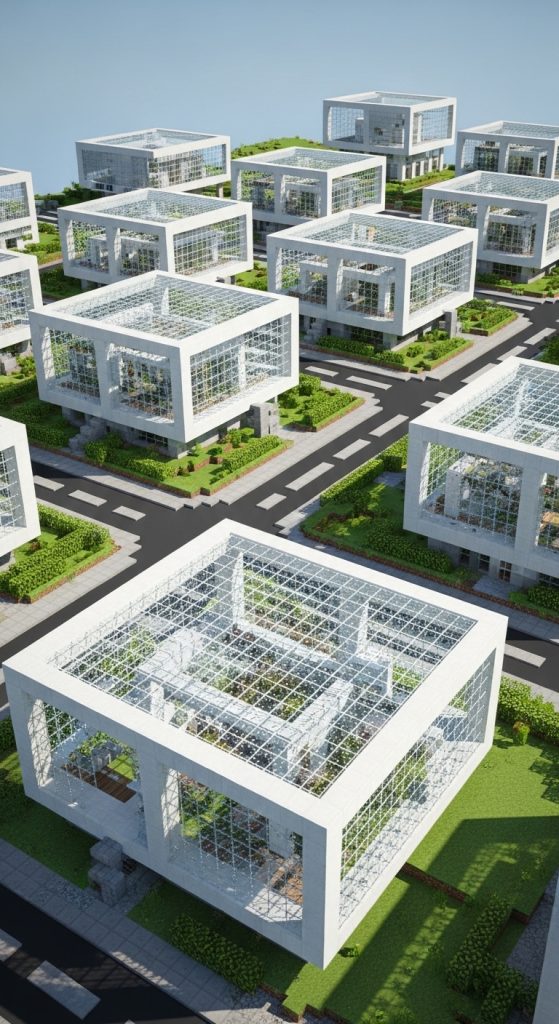
A modern glass house district introduces sleek architecture into Minecraft village design by combining transparency, open interiors, and geometric structure layouts. This concept is commonly featured in Pinterest inspiration collections because it creates bright and visually spacious settlements. Large glass windows allow natural lighting to improve interior visibility while supporting a clean minimalist style. Modern house districts also help separate residential zones from farming or industrial sections, making village organization easier to manage over time. Combining white concrete, stone, wood accents, and glass creates a balanced architectural palette suitable for modern builds.
Start by planning evenly spaced housing plots connected by clean pathways. Build rectangular or layered geometric structures using smooth blocks and large glass surfaces. Interior organization should remain simple, with compact storage, beds, lighting, and decorative plants placed carefully to avoid overcrowding. Exterior landscaping can include hedges, water channels, and lantern pathways to maintain an aesthetic atmosphere. Maintaining equal building height and consistent spacing between houses creates a realistic neighborhood effect. This easy project approach works especially well for survival villages because the modular structure design allows gradual expansion while preserving the overall visual identity of the district.

Idea 3: Elevated Mountain Village Layout
Execution Process
An elevated mountain village layout combines modern architecture with natural terrain integration. This creative project focuses on building homes and pathways along mountain slopes while preserving the surrounding landscape. Pinterest ideas often feature elevated villages because layered terrain creates dramatic visual depth and realistic environmental interaction. Instead of flattening entire mountainsides, modern village planning adapts structures to different height levels using stairways, bridges, and terraced foundations. This approach creates a visually dynamic village while maintaining functional movement across elevation changes.
To create this layout, begin by identifying stable mountain sections suitable for connected building platforms. Construct stone retaining walls and terraces to establish flat surfaces for homes and pathways. Use bridges and stairs to connect each section while maintaining consistent design materials throughout the village. Lighting placement becomes especially important in elevated builds because dark cliff edges can interrupt visibility and safety. Decorative trees, bushes, and lantern posts help blend modern construction with natural terrain. This beginner friendly method allows players to create impressive vertical villages without requiring highly complex building techniques. Careful planning and gradual expansion ensure that the village remains organized and visually balanced as additional structures are added.

Idea 4: Waterfront Modern Fishing Village
How to Create
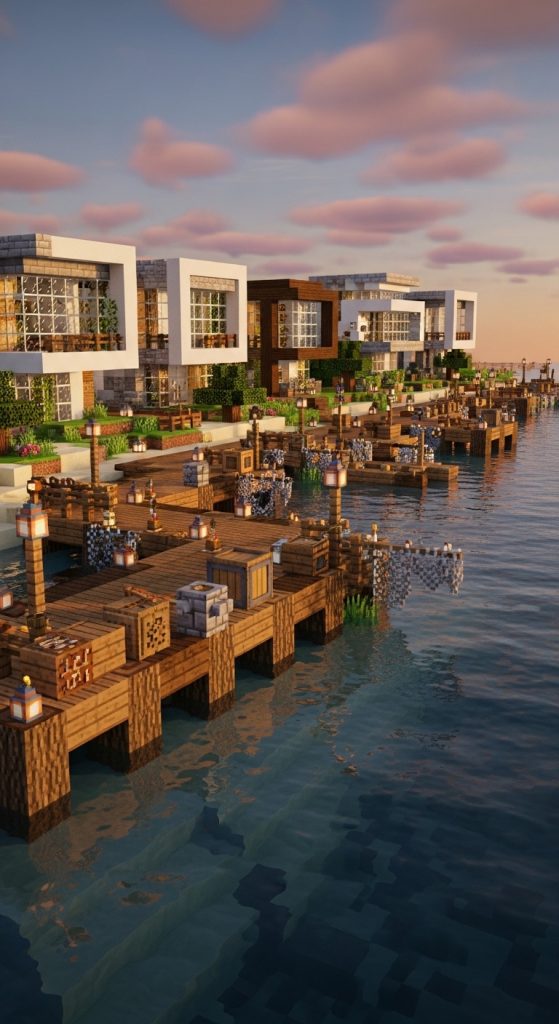
A waterfront modern fishing village combines practical resource gathering with aesthetic coastal architecture. This style is popular in Minecraft inspiration boards because water naturally enhances reflections, lighting, and environmental atmosphere. Modern fishing villages use docks, compact houses, organized storage areas, and decorative shoreline landscaping to create realistic settlements. The design works well near oceans, rivers, or lakes and supports both survival gameplay and visual storytelling. Neutral block combinations mixed with wood textures help maintain a balanced and modern appearance.
Begin by outlining the shoreline and planning wooden dock placement. Houses should face the water while maintaining equal spacing for consistent organization. Add pathways using slabs or gravel to connect all sections of the village. Small fishing stations, lantern posts, and boat docks improve realism while supporting practical gameplay functions. Decorative vegetation around the shoreline softens the structure layout and creates a more natural transition between land and water. This DIY style build remains beginner friendly because most structures use simple shapes and repetitive design systems. Organized dock placement and consistent material selection help unify the village while enhancing its coastal aesthetic.
Idea 5: Modern Farm Community Village
Setup Method
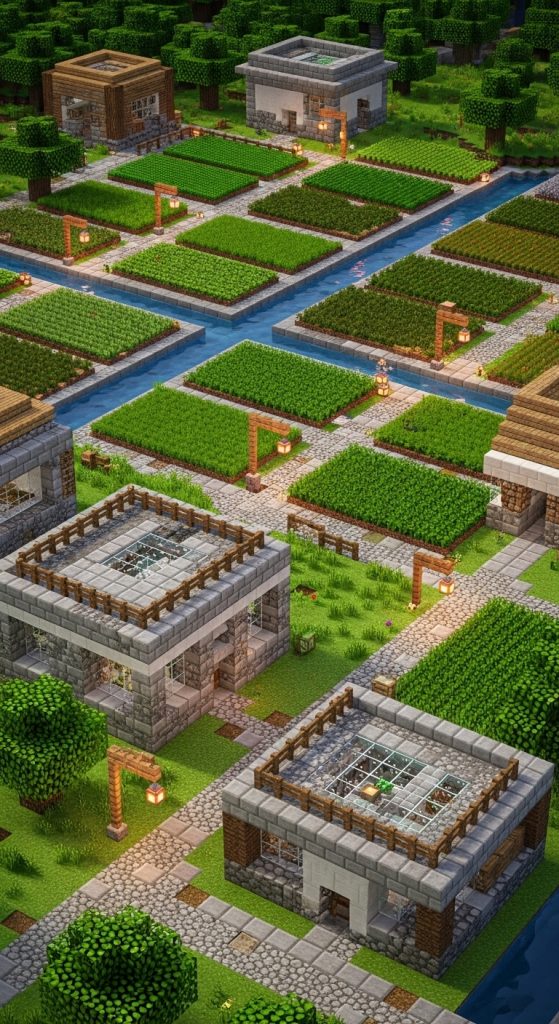
A modern farm community village focuses on efficient agriculture combined with organized residential planning. This design style supports survival gameplay while maintaining a clean and aesthetic village layout. Modern farming villages use structured crop sections, irrigation systems, and coordinated building placement to maximize functionality. Pinterest ideas often highlight these villages because they create visually satisfying patterns through organized fields and symmetrical landscaping. Combining farmland with minimalist architecture produces a balanced environment that feels realistic and productive.
Start by dividing farmland into evenly sized plots separated by walking paths and water channels. Residential houses should be positioned nearby for convenient access while maintaining clear separation from crop zones. Use fences, lanterns, and decorative leaves to organize field boundaries. Storage buildings can be integrated into the farming district using matching materials to preserve design consistency. This step by step approach helps beginners create highly functional villages without complicated redstone systems. Repeating patterns across crop layouts strengthens visual organization while improving navigation. Expanding gradually allows players to maintain balance between farming efficiency and decorative quality throughout the entire village.
Idea 6: Compact Survival Starter Village
How to Make
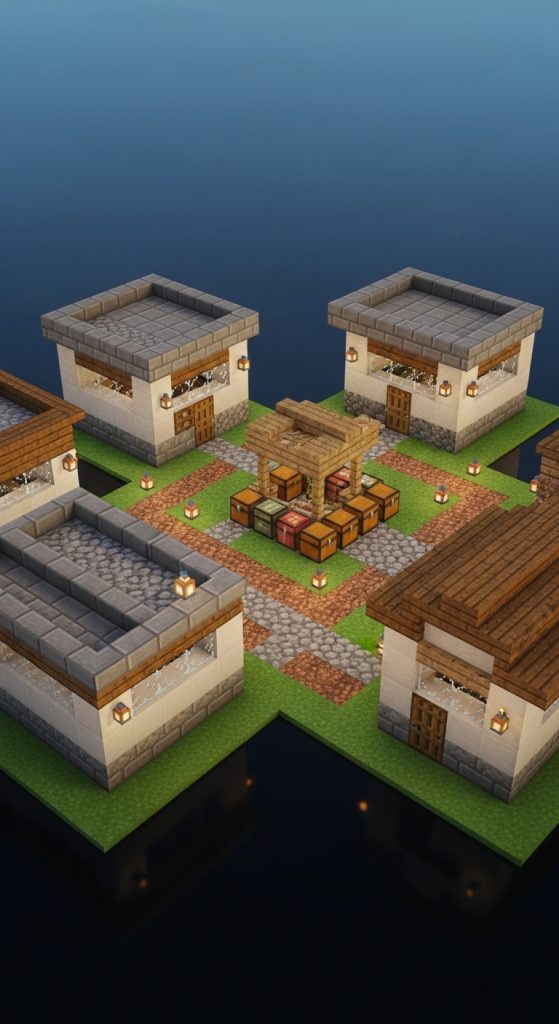
A compact survival starter village is designed for players who want efficient functionality without requiring large amounts of materials early in gameplay. This village style focuses on space-saving layouts, simple architecture, and organized utility placement. Pinterest inspiration frequently features compact villages because they demonstrate how small builds can still achieve strong aesthetic value. Minimalist style structures with clean pathways and coordinated block palettes create polished results even within limited space.
To build this village, start by creating a small central area containing storage, crafting stations, and villager workstations. Place compact homes evenly around the center while leaving room for future expansion. Use lanterns and path blocks to establish clear navigation routes. Small gardens and decorative bushes improve appearance without requiring extensive materials. This beginner friendly project works well for survival mode because it prioritizes efficiency and gradual progression. Maintaining consistent materials and building heights prevents the village from feeling disorganized as new structures are added over time.
Idea 7: Modern Desert Village Concept
Execution Process
A modern desert village uses sandstone palettes, geometric shapes, and warm lighting to create a clean architectural environment adapted to arid biomes. This concept has become a trending idea because desert landscapes naturally complement minimalist modern design. Open spacing, flat terrain, and warm color palettes allow villages to appear highly organized and visually striking. Combining sandstone with smooth stone and glass helps create balanced contrast while preserving biome identity.
Begin by flattening the terrain and mapping roads before constructing buildings. Houses should use layered roof designs and shaded windows to create architectural depth. Add courtyards, lantern pathways, and water features to improve realism and decoration quality. Palm-inspired landscaping using leaves and wood logs can soften the environment while maintaining consistency. This creative project remains practical because sandstone materials are widely accessible in desert biomes. Organized road systems and symmetrical spacing strengthen the overall modern aesthetic while improving village navigation and structure placement.

Idea 8: Forest Village With Modern Cabins
How to Create
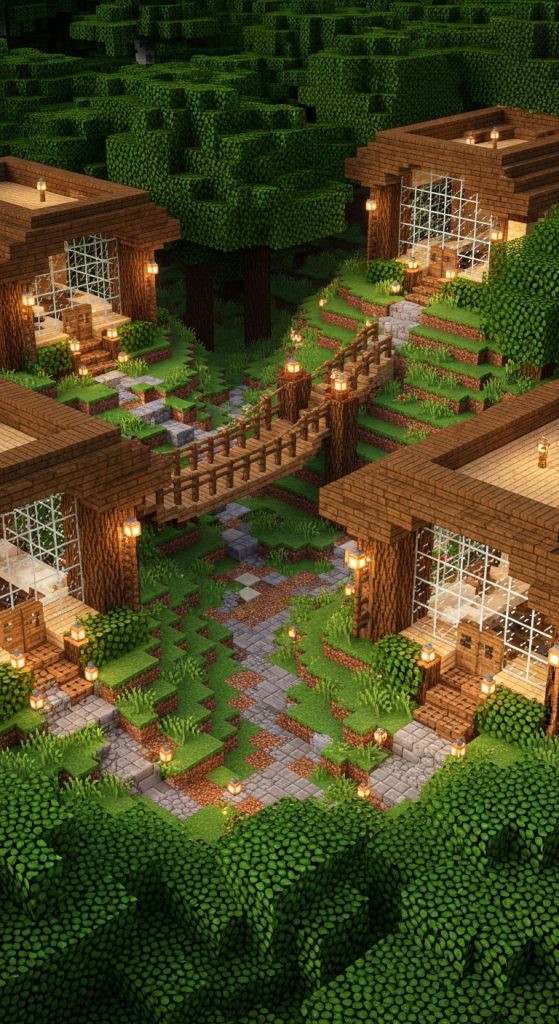
A forest village with modern cabins combines natural scenery with organized architectural planning. This village style focuses on integrating wooden modern structures into dense forest environments while maintaining clean layouts and visual consistency. Pinterest ideas frequently showcase forest villages because they create a peaceful atmosphere while preserving environmental immersion. Modern cabins often use large windows, layered roofs, and natural block palettes to blend with surrounding trees.
Start by clearing limited sections of the forest instead of removing the entire biome. Position cabins along curved pathways to follow natural terrain flow. Use lanterns and leaf decorations to maintain a warm atmosphere throughout the village. Elevated walkways and small bridges can connect cabins across uneven terrain while improving navigation. Interior layouts should remain simple and organized to support practical survival gameplay. This easy project method works well for beginners because cabin structures rely on repetitive patterns and straightforward building techniques. Consistent use of wood types and pathway materials ensures the village feels connected despite the irregular forest terrain.
Idea 9: Futuristic Modern Village Design
Step-by-Step Guide
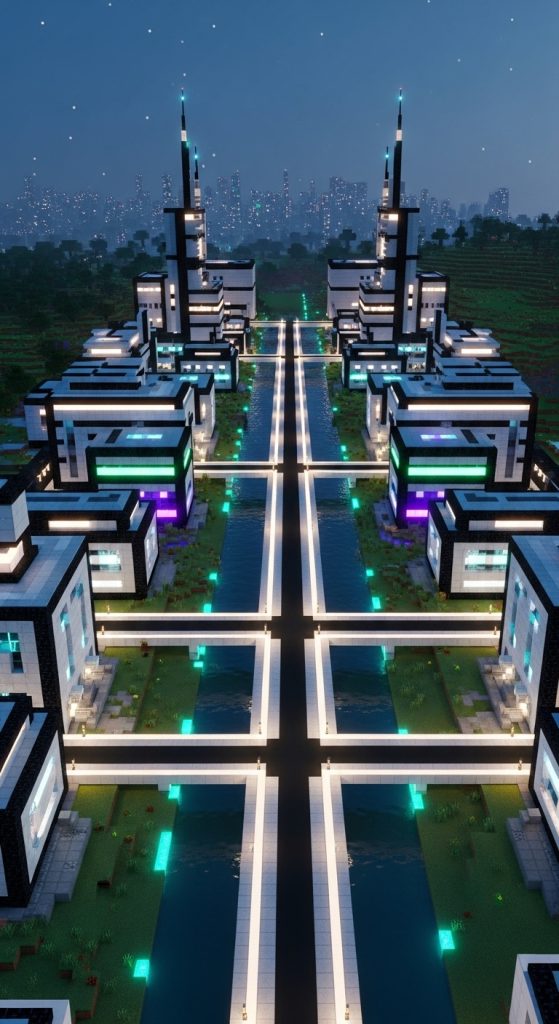
A futuristic modern village design introduces advanced architectural concepts into Minecraft using clean geometry, lighting effects, and sleek block combinations. This style focuses on simplicity, symmetry, and high visual contrast. Pinterest inspiration boards often feature futuristic villages because they stand out visually while remaining highly organized. White concrete, blackstone, glass, and lighting blocks are commonly used to achieve a polished futuristic appearance.
Begin by creating wide roads and evenly spaced building zones. Structures should feature layered rectangular forms and large window sections to emphasize modern design principles. Use hidden lighting under slabs and pathways to create clean nighttime illumination. Decorative water channels and elevated walkways improve visual depth without overcrowding the village. This creative idea remains accessible because many futuristic structures rely on repeating geometric shapes rather than highly detailed decoration. Consistency across lighting systems and block palettes is important for maintaining the futuristic atmosphere throughout the settlement.
Idea 10: Multi-Level Community Mega Village
Setup Method
A multi-level community mega village focuses on large-scale organization and interconnected districts. This project combines residential, farming, storage, and decorative areas into a fully planned settlement. Modern mega villages are trending because they demonstrate advanced planning while still using beginner friendly structure concepts. Roads, bridges, and layered platforms help divide the village into functional zones without making the layout feel disconnected.
To create this village, begin with a master layout plan showing district placement and transportation routes. Construct major roads first before adding homes and utility structures. Use elevation changes to separate community sections while maintaining smooth transitions between areas. Decorative landscaping, water systems, and lighting networks should connect all districts visually. This step by step method prevents the village from becoming chaotic as it expands. Consistent architectural themes across all buildings strengthen organization and improve the overall aesthetic quality of the settlement.

Common Beginner Mistakes and How to Avoid Them
One common mistake in modern Minecraft village projects is building structures without a layout plan. This often creates uneven spacing and disconnected pathways that reduce organization and visual consistency. Another frequent issue is mixing too many block palettes within the same village. Excessive variation can make modern builds appear cluttered rather than cohesive. Beginners also tend to overcrowd decorative elements, which weakens the clean minimalist style commonly associated with modern village designs. Poor lighting placement is another problem because dark pathways interrupt navigation and reduce overall aesthetic quality.
These mistakes can be avoided through careful planning and gradual construction. Establishing road systems before placing buildings improves organization significantly. Choosing two or three primary building materials helps maintain consistency across the entire village. Decorative elements should support the environment rather than dominate it. Lighting systems should be installed early during construction to maintain visibility and structure definition. Expanding slowly instead of building everything at once also improves long-term design quality and prevents layout confusion.
Practical Tips for Better Results
Consistent spacing is one of the most important factors in successful modern Minecraft village design. Equal distances between structures create visual balance and improve movement throughout the settlement. Using repeating block combinations strengthens architectural identity while simplifying material gathering during survival gameplay. Roads should remain wide enough for navigation but narrow enough to preserve compact organization.
Terrain integration also improves village realism significantly. Instead of flattening entire landscapes, adapting structures to natural elevation changes creates more immersive environments. Decorative vegetation should be used strategically around pathways and building edges to soften sharp architectural lines. Interior organization matters as much as exterior design because clean storage systems improve both functionality and aesthetics. Gradual expansion allows builders to refine details over time while maintaining a cohesive modern design across every district.
Styling, Presentation, or Organization Ideas
Modern Minecraft villages benefit from clear district separation and coordinated visual themes. Residential zones, farms, storage facilities, and decorative areas should each have defined purposes while remaining connected through matching pathways and lighting systems. Organized road layouts improve both appearance and functionality by guiding movement naturally through the village.
Color coordination also plays a major role in presentation quality. Neutral palettes combined with subtle accent blocks create cleaner modern aesthetics than highly saturated combinations. Water features, lanterns, and trimmed landscaping help frame important structures and strengthen visual hierarchy. Layered terrain and elevation changes add depth to large villages while preventing repetitive layouts. Maintaining symmetry in major roads and asymmetry in natural landscaping creates balanced visual contrast throughout the settlement.
Budget or Time Planning
Large Minecraft village projects become easier to manage when construction is divided into smaller phases. Starting with roads, storage, and central infrastructure allows players to establish organization before focusing on decorative details. This method reduces resource waste and improves long-term planning efficiency. Gathering materials in advance also saves time during active building sessions.
Players working in survival mode should prioritize practical structures first, including farms, villager stations, and storage systems. Decorative projects can be added gradually as resources become available. Repeating architectural patterns simplifies construction and reduces unnecessary material variation. Small daily building goals help maintain progress without making the project feel overwhelming. Structured planning ensures that large villages remain manageable while still achieving detailed and aesthetic results.
Creative Expansion and Advanced Inspiration
Modern Minecraft villages can be expanded into highly immersive environments through advanced landscaping and district specialization. Players can create marketplace zones, transportation systems, elevated walkways, and underground storage districts that increase realism and functionality. Combining modern architecture with biome-specific adaptations also improves environmental immersion and visual variety.
Advanced inspiration often includes layered lighting systems, custom bridges, rooftop gardens, and integrated water channels connecting different village sections. Players may also experiment with futuristic themes, industrial zones, or mixed architectural districts while maintaining a unified design palette. Large community projects benefit from consistent planning documents and visual references that guide long-term expansion. These creative ideas allow simple village concepts to evolve into highly detailed modern Minecraft worlds with strong aesthetic identity and practical organization.