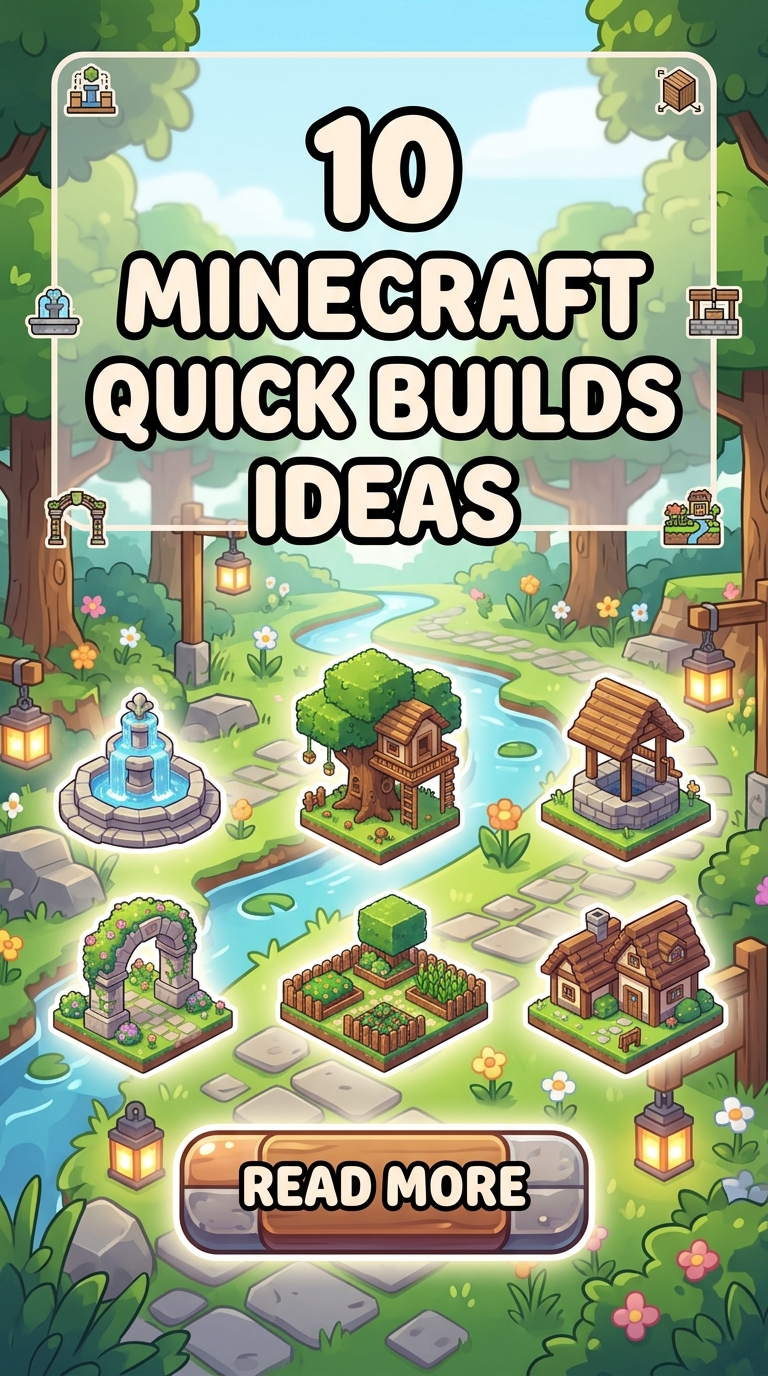
10 Minecraft Quick Builds Ideas
Minecraft quick builds have become one of the most popular Pinterest ideas for players who want creative results without spending days on large construction projects. These builds focus on speed, efficiency, and aesthetic design while remaining practical for survival worlds, creative servers, and beginner-friendly gameplay. Quick builds are small structures or decorative additions that can transform empty spaces into visually engaging environments using simple materials and easy planning methods. Many players search for DIY Minecraft inspiration that offers fast construction with strong visual impact, especially when creating organized worlds or themed environments.
This article explores 10 Minecraft quick builds ideas designed for players who want efficient and realistic creative projects. Readers will learn how to create decorative structures, compact utility builds, and aesthetic landscape additions using practical step-by-step methods. Each idea focuses on accessibility, making the builds suitable for beginners while still providing enough detail for experienced players seeking modern design inspiration. These builds also support organization and world improvement by filling unused spaces with meaningful decoration and functional elements. From compact gardens to simple towers and market stalls, every project in this guide combines speed with aesthetic value. The goal is to help players build visually appealing Minecraft environments without requiring massive resources, advanced redstone systems, or extensive construction time.
Why This Idea Is Trending or Useful
Minecraft quick builds continue trending across Pinterest ideas collections because they offer immediate creative satisfaction while remaining highly practical for everyday gameplay. Many players want aesthetic improvements for their worlds but prefer projects that can be completed in short sessions. Quick builds solve this problem by allowing players to create decorative structures, improve organization, and develop themed areas without large-scale planning. This makes them ideal for survival mode, multiplayer servers, and beginner-friendly creative exploration.
The popularity of these projects also comes from their DIY appeal and accessibility. Most quick builds use common materials such as wood, stone, fences, and lanterns, which are easy to gather early in gameplay. This allows players to experiment with creative ideas without depending on rare resources or advanced technical knowledge. Pinterest inspiration often highlights compact builds because they work well in screenshots, aesthetic showcases, and minimalist style world designs. Small builds also encourage players to focus on detail, symmetry, and decoration instead of size alone. Another reason these projects remain useful is their flexibility. Players can adapt quick builds into farms, pathways, village decorations, or storage spaces depending on their world theme. This combination of functionality and visual design keeps Minecraft quick builds highly relevant for modern creative project trends and aesthetic world planning.
Materials and Preparation
Preparing for Minecraft quick builds requires simple planning and organized material selection. Since these projects are designed for efficiency, players should focus on gathering versatile materials that work across multiple build styles. Common building blocks include oak wood, spruce wood, stone bricks, cobblestone, lanterns, fences, trapdoors, slabs, stairs, and glass panes. These materials support rustic, modern design, and fantasy-inspired builds while remaining beginner friendly and easy to obtain in survival mode.
Before starting any build, selecting an appropriate location is important. Small builds become more visually effective when placed naturally within the environment. Garden builds work best near houses, towers fit elevated terrain, and market stalls look more realistic near village roads or town centers. Players should also clear surrounding terrain and plan spacing to avoid overcrowding structures. Sketching a rough layout or using temporary blocks helps maintain symmetry and organization during construction.
Lighting preparation is another essential step because quick builds often rely on atmosphere and decoration for aesthetic impact. Lanterns, torches, and glow blocks improve visibility while enhancing visual depth. Inventory organization also saves time during the building process by reducing interruptions. Proper preparation allows players to complete projects more efficiently while maintaining cleaner designs and stronger aesthetic consistency throughout their Minecraft world.
Idea 1: Compact Wooden Watchtower
How to Create
A compact wooden watchtower is one of the most effective Minecraft quick builds for adding structure and vertical detail to an empty landscape. This build combines practicality with rustic aesthetic appeal, making it suitable for survival worlds, village expansions, and forest-themed environments. The tower functions as both decoration and observation point while requiring only basic materials and limited construction time. Its visual impact comes from elevation, symmetry, and layered wooden textures rather than large size or complicated mechanics.
The design typically uses oak or spruce wood combined with fences, trapdoors, and lanterns to create depth and realism. Players often place these towers near roads, farms, or settlement entrances to improve world organization and atmosphere. The compact shape makes the structure beginner friendly because it relies on repeated patterns instead of advanced architectural techniques. Despite its small footprint, the watchtower creates strong environmental presence and helps connect nearby builds into a more cohesive layout. This type of easy project also teaches players important design concepts such as proportion, support framing, and decorative layering without overwhelming complexity.
To build the tower, begin with a four-block square foundation using logs or stone blocks. Extend vertical wooden supports upward and connect them using planks and slabs at each level. Add ladders or stairs inside for accessibility. Create a small observation platform at the top surrounded by fences and covered with a simple roof using stairs or slabs. Lanterns hanging from corners improve lighting and atmosphere. Trapdoors placed beneath roof edges add texture and visual detail. Surround the base with barrels, bushes, or pathways for additional decoration. The finished structure works as a realistic landscape feature while remaining fast to complete and highly adaptable for different Minecraft themes.

Idea 2: Small Marketplace Stall
Step-by-Step Guide
A small marketplace stall is a practical Minecraft quick build that adds life and realism to villages, town centers, and trading districts. This build focuses on compact design, color coordination, and decorative presentation rather than structural complexity. Market stalls are commonly featured in Pinterest ideas because they create busy environments while requiring minimal space and materials. They also improve the visual organization of towns by filling empty streets and connecting larger buildings naturally.
The stall design usually includes wooden supports, colorful canopies, barrels, and decorative storage blocks to simulate trading activity. Different block combinations can represent food stands, blacksmith stations, potion vendors, or farming markets depending on the surrounding theme. This flexibility makes the build highly customizable while remaining beginner friendly. The aesthetic appeal comes from layered decoration and material contrast rather than build size. Multiple stalls placed together create dynamic market areas that feel active and immersive.
Start construction by placing four fence posts in a rectangular formation. Connect them using slabs or wooden planks to create a canopy frame. Add colored wool or banners on top to form a market cover. Place barrels, chests, item frames, and decorative blocks beneath the canopy to define the stall’s purpose. Lanterns attached to fence posts improve lighting and visual warmth. Pathways made from gravel or stone bricks help integrate the stall naturally into village layouts. This quick build works well as a creative project for improving town organization and creating realistic public spaces.

Idea 3: Decorative Fountain Centerpiece
How to Make
A decorative fountain serves as a compact focal point that improves Minecraft town squares, gardens, and courtyard spaces. This build emphasizes symmetry, water movement, and layered stone design to create aesthetic balance in outdoor environments. Fountains are popular in Minecraft inspiration collections because they instantly enhance empty areas while remaining easy to build. They also fit multiple architectural themes including medieval, modern design, fantasy, and minimalist style worlds.
The structure usually combines stone bricks, slabs, stairs, and water sources arranged around a central pillar or basin. Decorative foliage, lanterns, and pathways surrounding the fountain improve visual integration. The sound and movement of flowing water also create a more immersive atmosphere within the game environment. Compact fountains work especially well in beginner-friendly town projects because they require little space and limited resources while delivering strong decorative value.
To create the fountain, start with a circular or square stone foundation. Build a raised center column using stone bricks or polished blocks. Place water sources at the top so water flows evenly into surrounding basins. Add stairs and slabs around edges to soften the structure and improve detail. Lanterns hidden beneath trapdoors or leaves create subtle nighttime lighting. Decorative bushes and flower arrangements surrounding the fountain enhance presentation and organization. This build can be completed quickly while significantly improving the aesthetic quality of nearby structures and public gathering spaces.

Idea 4: Simple Greenhouse Garden
Execution Process
A simple greenhouse garden is a functional and aesthetic Minecraft quick build designed for farming, decoration, and compact landscape improvement. This structure combines glass walls, wooden framing, and organized crop layouts to create a clean and visually balanced environment. Greenhouses remain popular in Pinterest ideas because they blend practicality with minimalist style design while supporting organized farming systems.
The build typically uses glass panes, wooden logs, stone pathways, and crop rows arranged in symmetrical patterns. Players often integrate flower beds, water channels, and lantern lighting to improve realism and atmosphere. The transparent structure allows crops to remain visible from outside, which contributes to the overall aesthetic effect. This project works well for beginner-friendly survival worlds because it teaches layout planning and decorative farming techniques.
Begin construction with a rectangular wooden frame using logs and planks. Fill walls and roofing sections with glass panes to create transparency and natural lighting. Inside the structure, organize crops into neat rows separated by water channels or pathways. Add barrels, compost bins, and flower pots for decoration. Hanging lanterns improve visibility while maintaining a warm atmosphere. Exterior landscaping using bushes and fences helps integrate the greenhouse naturally into surrounding terrain. The final result is a compact and efficient farming structure that supports both organization and visual appeal.

Idea 5: Cozy Campfire Rest Area
Setup Method
A cozy campfire rest area creates a warm outdoor gathering space using minimal materials and simple construction techniques. This Minecraft quick build is commonly used near forests, pathways, villages, and survival bases to improve environmental storytelling and atmosphere. The design focuses on seating arrangements, lighting balance, and natural decoration rather than structural complexity.
Campfire rest areas often include logs, benches, lanterns, tents, and stone pathways surrounding a central fire source. These builds create realistic resting zones that make Minecraft worlds feel more lived-in and immersive. The compact size and flexible layout make this project ideal for beginner-friendly creative ideas and survival world decoration.
Start by clearing a small circular area and placing a campfire at the center. Surround it with stone blocks or slabs to define the fire pit. Add wooden benches using stairs and trapdoors positioned around the fire. Small tents made from wool and fence posts can provide shelter details. Lanterns hanging from nearby trees or wooden supports improve nighttime visibility. Bushes, logs, and coarse dirt pathways help the area blend naturally into the landscape. This easy project enhances outdoor spaces while requiring little preparation or advanced planning.

Idea 6: Mini Stable for Horses
How to Create
A mini horse stable is a compact functional build that improves farm areas and medieval-themed worlds. The structure focuses on organization, realism, and rustic design using basic materials such as wood, fences, and hay bales. Stables remain useful because they provide designated animal areas while enhancing environmental decoration.
The design usually includes individual horse stalls, feeding areas, and storage sections within a small wooden structure. Open walls and layered roofing improve ventilation realism while maintaining visual simplicity. This type of build supports organized gameplay and creates a stronger connection between farming systems and surrounding architecture.
Begin with a rectangular wooden foundation supported by log pillars. Divide the interior using fences to create separate stalls. Add hay bales, water troughs, and barrels for detail. Use stairs and slabs to build a slanted roof with overhangs for depth. Lanterns improve lighting and atmosphere. Surround the stable with fences and pathways to maintain organization. This quick build works well near farms, villages, and countryside environments.

Idea 7: Compact Fishing Dock
Step-by-Step Guide
A compact fishing dock is a practical waterfront build designed for rivers, lakes, and ocean coastlines. The structure combines wood textures, water integration, and functional decoration to create realistic shoreline environments. Fishing docks are widely used in Minecraft aesthetic projects because they add movement and realism to natural landscapes.
The build often includes wooden platforms, support beams, barrels, boats, and lanterns positioned along the water edge. The visual appeal comes from the relationship between structure and surrounding environment rather than build size. This project works especially well in survival mode because it supports fishing activity while improving coastal organization.
To build the dock, extend wooden planks outward over water using log supports beneath. Add fences along edges for safety and realism. Place barrels, crates, and fishing rods as decorative elements. Small boats attached nearby enhance immersion. Lanterns mounted on fence posts improve nighttime visibility. Stone pathways connecting the dock to nearby structures help integrate the build into larger town layouts. This beginner-friendly project adds strong environmental detail with minimal materials.

Idea 8: Small Enchantment Hut
How to Make
A small enchantment hut provides both functionality and magical atmosphere within Minecraft worlds. This quick build combines compact design with fantasy-inspired decoration, making it suitable for forests, villages, and wizard-themed environments. The structure focuses on lighting, symmetry, and interior organization.
The hut design often uses dark wood, bookshelves, lanterns, and stone materials to create a mystical appearance. Compact enchantment spaces are popular because they provide gameplay utility while remaining visually interesting. The aesthetic effect comes from warm lighting and enclosed layouts that create focused interior spaces.
Begin construction with a small square wooden base surrounded by stone detailing. Build walls using dark planks and logs while leaving space for windows. Place bookshelves around the enchantment table inside. Add lanterns, candles, and trapdoor details to improve atmosphere. A sloped roof using stairs and slabs creates visual depth. Surround the hut with pathways, mushrooms, and bushes for environmental integration. This creative project is efficient, practical, and highly decorative.

Idea 9: Decorative Windmill Build
Execution Process
A decorative windmill adds movement and vertical focus to farming areas and countryside landscapes. This Minecraft quick build emphasizes symmetry, layered roofing, and mechanical detail while remaining relatively simple to construct. Windmills are commonly featured in Pinterest inspiration because they create recognizable landmarks within open terrain.
The build typically combines stone foundations with wooden upper sections and rotating blade designs made from fences and wool. The tall structure improves visual variety while supporting realistic agricultural environments. Windmills also work well as storage towers or observation points depending on interior organization.
Start with a circular stone base and extend wooden walls upward. Build a peaked roof using slabs and stairs for texture variation. Attach large rotating blades using fences and wool blocks connected to the front center section. Add windows, lanterns, and small farm plots nearby for realism. Pathways and fences surrounding the structure improve presentation. This quick build creates strong visual impact while remaining beginner friendly.

Idea 10: Minimalist Storage Shed
Setup Method
A minimalist storage shed is a highly practical Minecraft quick build focused on organization and compact functionality. This structure provides storage space while maintaining a clean and modern aesthetic. Small storage buildings are useful because they reduce clutter and improve base efficiency without requiring large construction areas.
The shed design usually includes wood, stone, barrels, chests, and shelving arrangements organized within a simple rectangular structure. Minimalist style principles emphasize clean lines, symmetry, and efficient space usage. This makes the project suitable for modern design worlds and organized survival bases.
Begin with a compact rectangular foundation using stone or wood. Build simple walls and a flat or sloped roof using slabs for depth. Arrange storage containers neatly inside with labeled sections if desired. Lanterns or windows improve visibility without overcrowding the design. Exterior decoration should remain minimal with pathways and small plants. This easy project supports practical gameplay while maintaining aesthetic consistency across the surrounding environment.

Common Beginner Mistakes and How to Avoid Them
Many beginners make the mistake of building structures without planning spacing, proportions, or environmental integration. Quick builds often lose aesthetic quality when players overcrowd decorations or combine unrelated materials without consistency. Another common issue involves flat walls and roofs that lack depth. Using slabs, stairs, fences, and trapdoors helps create texture variation and improves realism. Poor lighting placement also reduces visual quality and can make builds appear unfinished. Players should use lanterns and subtle lighting sources to enhance atmosphere naturally.
Ignoring surrounding terrain is another frequent mistake. Builds placed without pathways, landscaping, or environmental blending often look disconnected from the world. Adding bushes, gravel roads, flower patches, and elevation changes improves integration significantly. Beginners should also avoid building too large when focusing on quick projects. Compact builds with detailed decoration usually create stronger visual results than oversized structures with empty interiors. Careful planning and organized material selection help prevent unnecessary rebuilding and improve overall creative project quality.
Practical Tips for Better Results
Improving Minecraft quick builds requires attention to detail, organization, and material balance. Players should begin with limited block palettes to maintain visual consistency across structures. Combining two or three primary materials usually creates cleaner designs than excessive variation. Layering techniques using stairs, slabs, and trapdoors help add depth to walls and roofing without increasing construction complexity.
Studying real architecture and Pinterest ideas can improve understanding of structure proportions and decorative placement. Natural landscaping also plays an important role in presentation. Adding trees, gardens, pathways, and elevation variation helps small builds feel more realistic and immersive. Lighting should remain balanced and intentional rather than randomly distributed.
Building in stages also improves efficiency. Start with foundations and structural frames before adding decorative details. This approach reduces mistakes and keeps layouts organized. Players should experiment with different themes such as medieval, modern design, rustic, or fantasy styles to expand creativity and develop stronger aesthetic awareness.
Styling, Presentation, or Organization Ideas
Presentation significantly affects how Minecraft quick builds appear within a world. Even small structures become visually impressive when placed within organized environments. Creating themed districts such as farming areas, market streets, or forest settlements improves world cohesion and supports stronger aesthetic storytelling.
Pathways made from gravel, stone, or wood help connect structures naturally while guiding movement through the environment. Decorative elements such as lantern posts, benches, flower beds, and fences improve realism and visual layering. Consistent color palettes also strengthen overall presentation. Rustic builds benefit from earthy tones, while modern design projects often use cleaner block combinations and minimalist layouts.
Players should also focus on spacing between structures. Crowded builds reduce visibility and weaken design impact. Leaving open areas for gardens, ponds, or public spaces creates balance within the world layout. Proper organization transforms quick builds from isolated projects into cohesive environments that feel intentional and immersive.
Budget or Time Planning
Minecraft quick builds are most effective when players manage time and materials efficiently. Gathering versatile materials in advance prevents interruptions during construction and supports smoother workflow. Common blocks such as wood, cobblestone, and stone bricks can be reused across multiple projects, making them practical for budget ideas and survival gameplay.
Starting with smaller projects before expanding into larger environments also improves time management. Players can complete decorative additions gradually while maintaining consistent quality throughout the world. Dividing projects into stages such as foundation work, structure building, and decoration helps reduce mistakes and improves organization.
Choosing nearby build locations also saves time during material transportation in survival mode. Compact builds generally require fewer resources while still improving visual quality significantly. Careful planning allows players to complete multiple projects efficiently without feeling overwhelmed by large-scale construction demands.
Creative Expansion and Advanced Inspiration
Once players become comfortable with Minecraft quick builds, they can expand projects into larger themed environments and advanced creative layouts. Multiple small builds connected together often create more immersive worlds than single oversized structures. Market stalls can develop into towns, docks can expand into harbor districts, and watchtowers can become castle defense systems.
Experimenting with biome-specific architecture also improves creativity. Snow villages, desert markets, jungle settlements, and mountain fortresses each offer unique material combinations and design opportunities. Advanced players can introduce custom terrain shaping, bridges, waterways, and layered landscaping to enhance realism further.
Mixing architectural styles creates additional creative possibilities. Combining medieval foundations with modern design features or fantasy-inspired decoration results in highly original structures. Players can also improve builds using lighting gradients, vertical layering, and interior detailing techniques. These expansions encourage long-term world development while maintaining the simplicity and accessibility that make Minecraft quick builds such effective creative projects.