10 Minecraft Mushroom Cows Ideas
Minecraft continues to inspire players with its endless possibilities for creativity, especially when it comes to unique mobs and themed builds. One of the most visually distinctive and beloved creatures in the game is the mushroom cow, often called a mooshroom. These red and brown variants introduce a natural fantasy element that blends farming mechanics with magical forest aesthetics. In Pinterest-style inspiration spaces, mushroom cow ideas have become a trending topic because they combine creativity, survival gameplay, and decorative storytelling in one concept. This article explores practical and visually appealing ways to design, build, and integrate Minecraft mushroom cow ideas into your worlds.
You will learn how to create themed habitats, decorative farms, aesthetic enclosures, and imaginative builds centered around mushroom cows. Each idea focuses on structure, design thinking, and functional placement within your Minecraft environment. Whether you prefer a minimalist style or a highly detailed fantasy landscape, these concepts help transform simple mobs into centerpiece features. The goal is to provide clear, structured inspiration that supports both beginner-friendly execution and advanced creative expansion.
Why This Idea Is Trending or Useful
Minecraft mushroom cow ideas are gaining popularity across Pinterest ideas and creative communities because they blend natural design with fantasy aesthetics. Players are increasingly drawn to builds that feel peaceful, organic, and visually cohesive. Mushroom cows naturally fit into this style because they already resemble magical forest creatures. This makes them ideal for DIY-style world building where creativity and storytelling matter as much as functionality.
Another reason this theme is trending is its accessibility. Even beginner players can design mushroom cow areas without advanced building skills. Simple materials like wood, stone, mushrooms, and grass blocks are enough to create visually appealing environments. At the same time, experienced builders can expand these ideas into complex home decor-inspired farms, enchanted biomes, or themed survival bases. The flexibility of the concept makes it suitable for modern minimalist builds as well as highly detailed fantasy worlds.
Materials and Preparation
Before starting Minecraft mushroom cow builds, it is important to gather and plan materials that support both structure and aesthetics. Common materials include wood logs, planks, fences, stone blocks, moss, mushrooms, hay bales, and natural terrain blocks such as dirt and grass. These materials help create organic environments that match the natural biome where mushroom cows are typically found. Lighting materials like lanterns or glowstone alternatives also help enhance visibility and atmosphere during nighttime gameplay.
Preparation also involves selecting the right location. Mushroom island biomes or shaded forest environments work best for maintaining thematic consistency. Planning the enclosure size is important depending on whether you want a simple pen or a detailed habitat. It is also useful to sketch layout ideas in advance, including feeding areas, walking paths, decorative zones, and shelter spaces. This preparation ensures that the final build remains structured, functional, and visually balanced.
Idea 1: Enchanted Mushroom Pasture Habitat
How to Create
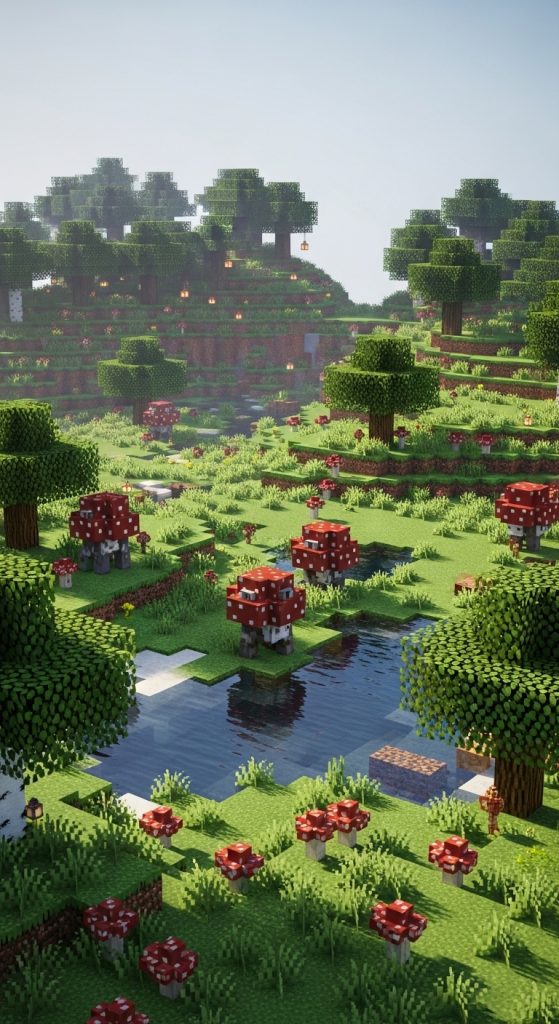
An enchanted mushroom pasture habitat focuses on creating a natural yet magical environment where mushroom cows can roam freely. The concept emphasizes open space combined with subtle fantasy elements that make the area feel alive. Instead of building a closed pen, this design uses soft boundaries like fences hidden behind foliage or terrain shaping to guide movement. The goal is to create a seamless transition between nature and structure, making the habitat feel like part of the world rather than a separate enclosure.
This idea works well for players who enjoy aesthetic builds and immersive environments. The pasture should include a mix of red and brown mushrooms, tall grass, small water pools, and uneven terrain. Adding subtle elevation changes enhances realism. Natural lighting is important, so placing lanterns on logs or hanging them from trees helps maintain atmosphere without breaking immersion. The design should prioritize flow and openness.
Step-by-Step Guide
Start by selecting a flat or gently rolling terrain in a forest or mushroom biome. Shape the land using dirt, grass, and podzol to create a natural base. Add clusters of mushrooms in varying sizes to mimic wild growth. Create shallow water pools and small pathways using gravel or coarse dirt. Then place mushroom cows inside the area and guide their movement using fences hidden under leaves or bushes. Decorative trees can be added to frame the pasture and provide shade.
Finally, enhance the habitat with subtle lighting and environmental details. Lanterns placed on logs or under tree canopies help maintain visibility without disrupting the natural feel. Add small decorative elements such as fallen logs or moss patches. The result is a peaceful, immersive pasture that feels both functional and visually aligned with modern Minecraft creative project inspiration.
Idea 2: Minimalist Mushroom Cow Pen Design
How to Create
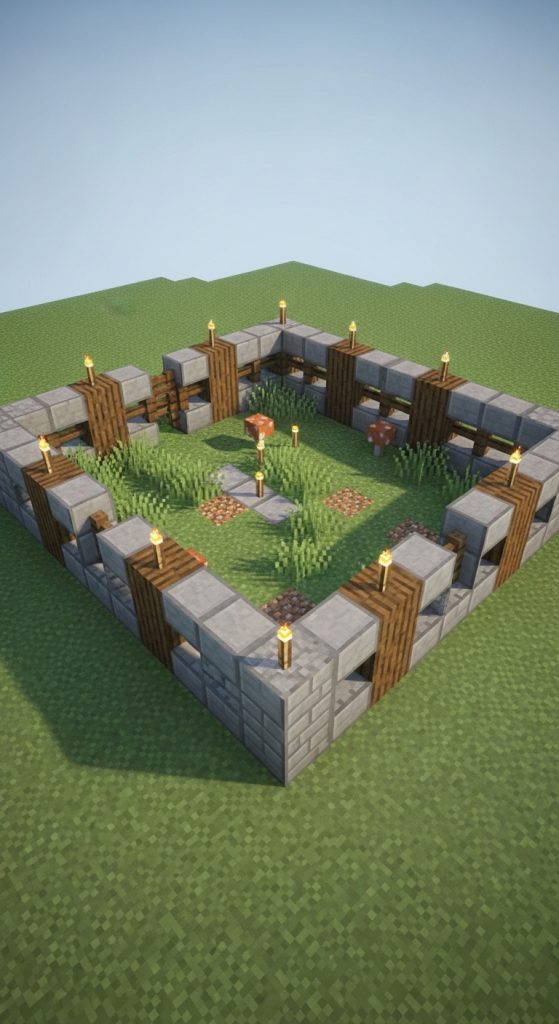
A minimalist mushroom cow pen design focuses on simplicity, clean lines, and functional space usage. This idea is ideal for players who prefer modern design principles and organized layouts. Instead of elaborate decorations, the pen uses structured geometry and limited materials to create a clean and efficient enclosure. The emphasis is on clarity and balance rather than complexity.
The design typically uses wood, stone, or smooth block types to create a rectangular or circular pen. Open visibility is important, so fences or glass barriers are often used. The surrounding area remains uncluttered, with minimal vegetation and carefully placed decorative elements. This approach reflects minimalist style principles commonly seen in modern home decor inspiration but adapted for Minecraft environments.
Step-by-Step Guide
Begin by selecting a flat terrain area and marking a symmetrical layout for the pen. Use stone or wood blocks to create a defined boundary. Replace sections with fences or glass panes to maintain visibility while keeping structure intact. Inside the pen, place a few mushrooms and grass patches to provide a natural feel without overcrowding the space.
Add mushroom cows into the enclosure and ensure they have enough movement space. Keep decorations minimal, focusing only on functional lighting such as torches or lantern posts. Surround the pen with a clean perimeter path made of stone slabs or gravel. This approach creates a tidy, beginner friendly design that fits well into organized survival bases.
Idea 3: Fantasy Mushroom Grove Sanctuary
How to Create
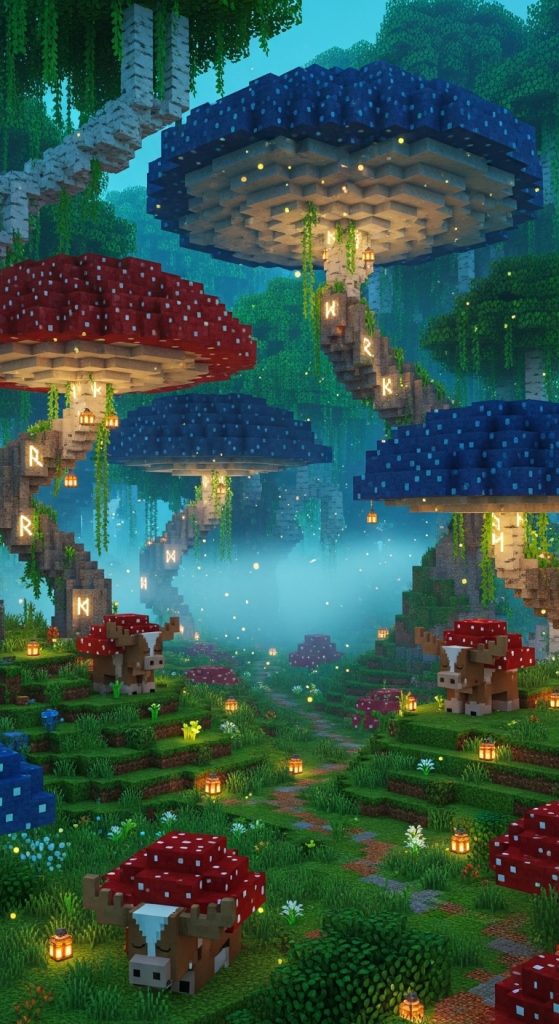
A fantasy mushroom grove sanctuary transforms mushroom cows into magical forest creatures living in an enchanted environment. This concept is highly decorative and focuses on storytelling through environment design. The grove should feel like a hidden sanctuary deep within a mystical forest, where nature and magic blend seamlessly.
The design uses oversized mushrooms, glowing elements, and layered terrain to create depth. Trees with twisted shapes, glowing fungi, and fog-like lighting effects enhance the atmosphere. The sanctuary should feel isolated and peaceful, making it a perfect retreat location within a Minecraft world. This idea is especially popular among players who enjoy creative project builds with fantasy themes.
Step-by-Step Guide
Start by shaping a forested area with uneven terrain and dense tree placement. Add large mushrooms as focal points, mixing different heights and colors. Create winding paths using moss, podzol, and dirt variations. Place mushroom cows within open clearings surrounded by glowing mushrooms and decorative vegetation.
Enhance the environment with subtle lighting such as hidden lanterns or glowstone concealed under leaves. Add small water streams or ponds to create movement within the landscape. The final result is a highly atmospheric grove that feels alive and immersive, perfect for storytelling-focused gameplay.
Idea 4: Underground Mushroom Cow Cavern
How to Create
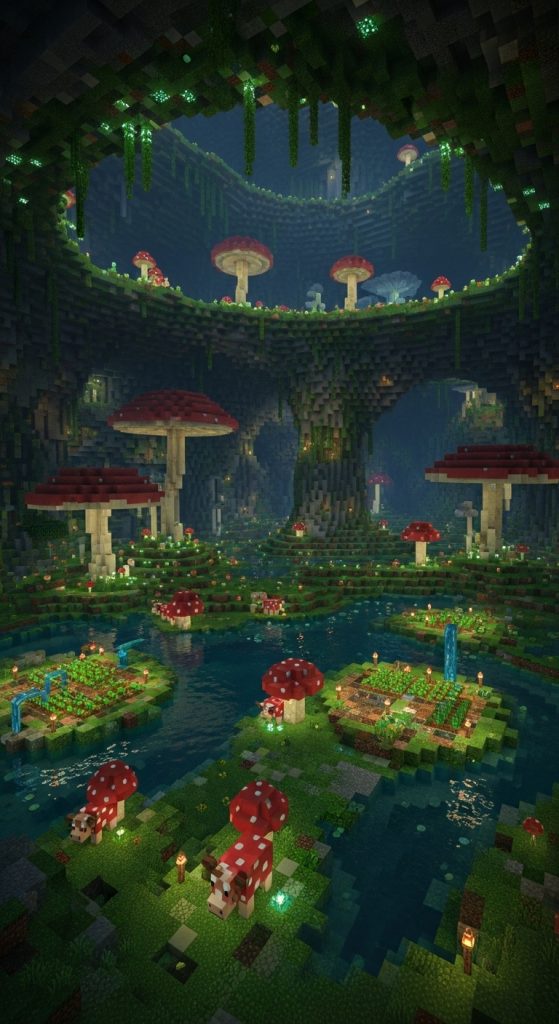
An underground mushroom cow cavern introduces a unique twist by placing mushroom cows in a hidden subterranean environment. This design emphasizes mystery and discovery, making it ideal for survival bases with secret farming areas. The cavern should feel naturally formed while still structured enough for gameplay functionality.
The aesthetic focuses on stone textures, moss growth, and dim lighting. Mushrooms naturally fit into underground environments, making them perfect decorative elements. The space should feel expansive rather than cramped, with open chambers and connected tunnels. This concept aligns with modern Minecraft inspiration trends that favor hidden base designs.
Step-by-Step Guide
Dig out a large underground chamber and shape it with natural curves instead of rigid walls. Use stone, andesite, and moss blocks to create texture variation. Add mushroom clusters throughout the cavern to establish theme consistency. Include small water pools and dripstone formations if available.
Place mushroom cows in designated areas separated by natural rock formations. Use lanterns or glow elements sparingly to maintain atmosphere. Create pathways between sections for easy movement. The final build becomes a hidden farming sanctuary that blends functionality with aesthetic underground design.
Idea 5: Floating Mushroom Island Build
How to Create
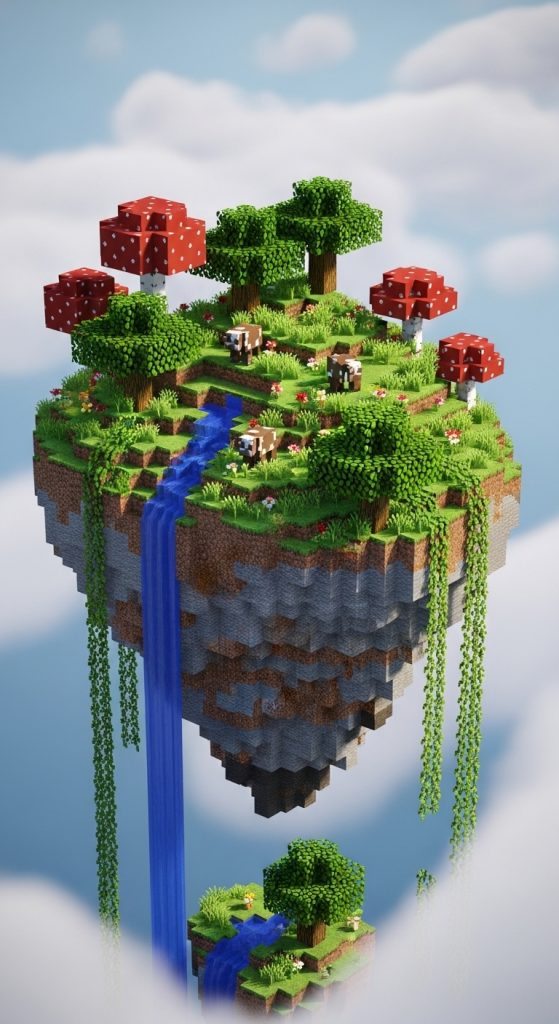
A floating mushroom island build brings a surreal and visually striking concept into Minecraft. The idea revolves around creating an elevated landmass suspended in the sky, home to mushroom cows and fantasy vegetation. This design is popular in creative inspiration boards due to its dramatic visual impact.
The island should appear organic rather than artificially shaped. Rounded edges, layered terrain, and cascading vegetation help achieve this effect. Mushroom cows roaming on floating land create a magical atmosphere that feels disconnected from the survival world below.
Step-by-Step Guide
Begin by building a floating landmass using dirt, grass, and stone layers. Shape it irregularly to avoid geometric symmetry. Add mushrooms, trees, and small water features on the surface. Create hanging vines or roots to enhance the floating illusion.
Introduce mushroom cows and allow them space to roam. Add clouds or mist effects using blocks or terrain height differences. Include small wooden structures or viewing platforms for aesthetic detail. This creates a dramatic sky-based habitat ideal for creative builds.
Idea 6: Rustic Mushroom Farmstead
How to Create
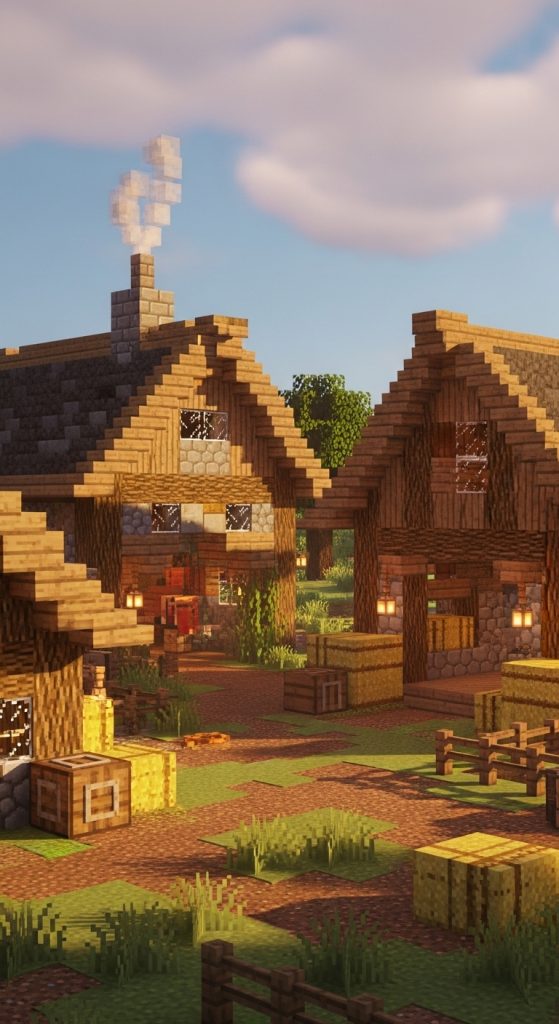
A rustic mushroom farmstead combines agricultural structure with natural design. This idea focuses on creating a functional yet visually warm environment where mushroom cows are part of a larger farming system. It reflects traditional home decor inspiration adapted into Minecraft gameplay.
The design uses wood, hay, stone, and natural terrain elements. Buildings should look aged and organic, blending into the environment. The mushroom cows serve as both decorative and functional elements within the farmstead.
Step-by-Step Guide
Construct small wooden barns or shelters using logs and planks. Surround the area with fenced farming plots and natural vegetation. Add mushroom patches near feeding areas and water troughs.
Place mushroom cows in designated sections of the farm. Add pathways using gravel or dirt. Include storage barns or crop areas nearby to complete the farm aesthetic. This creates a balanced survival-friendly build with rustic charm.
Idea 7: Magical Night Glow Mushroom Arena
How to Create
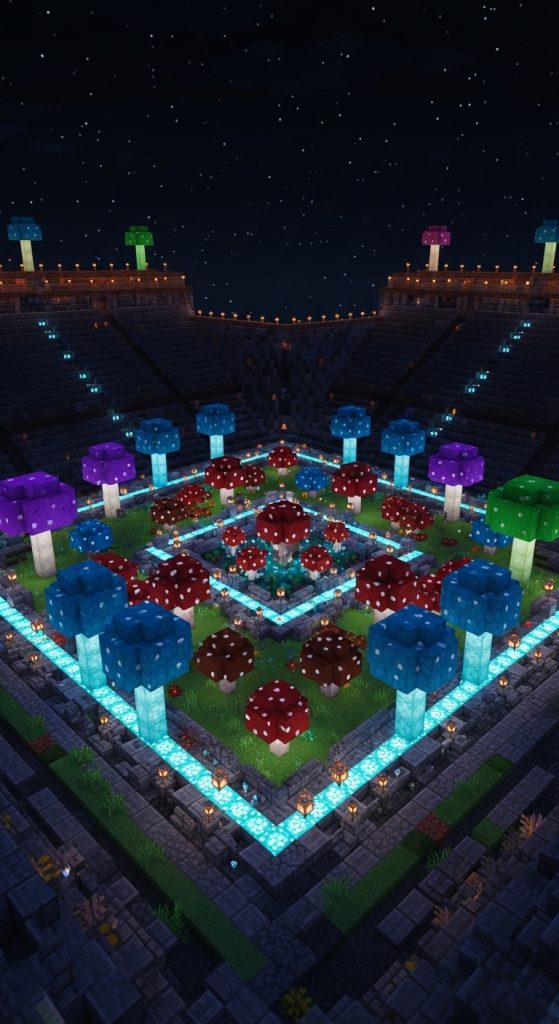
A magical night glow mushroom arena focuses on lighting and atmosphere. The idea is to create a space that becomes visually stunning during nighttime gameplay. Mushroom cows are placed in an illuminated environment that enhances their unique appearance.
Lighting plays the central role in this design. Soft glowing elements, lantern clusters, and bioluminescent-inspired blocks help define the space. The arena should feel structured but visually dynamic.
Step-by-Step Guide
Build a circular or oval arena using stone or wood borders. Add mushroom clusters and decorative terrain inside. Install lighting sources evenly throughout the area to create balanced illumination.
Introduce mushroom cows and ensure movement space is adequate. Add elevated viewing platforms or pathways. The result is a visually engaging nighttime habitat suitable for aesthetic-focused builds.
Idea 8: Mushroom Cow Village Corner
How to Create
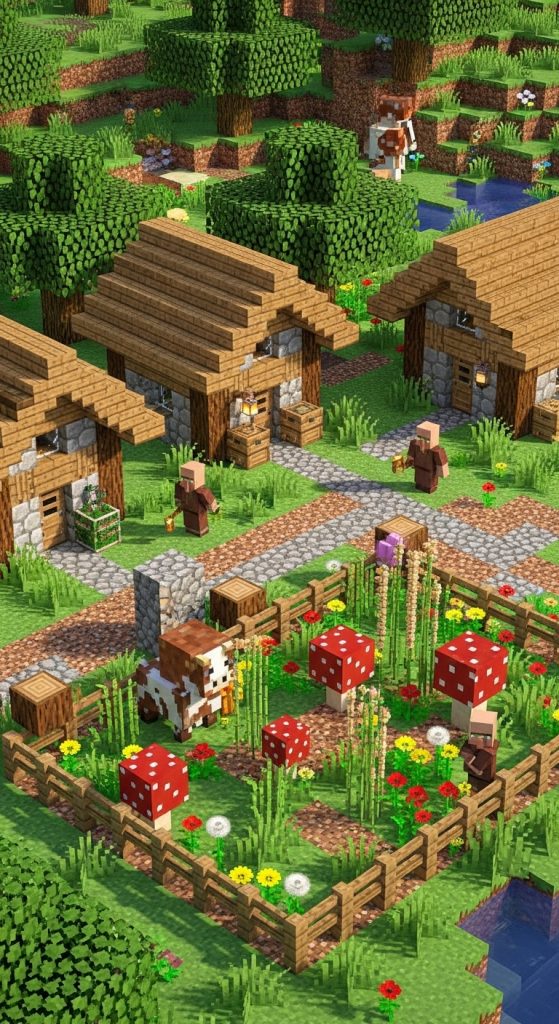
A mushroom cow village corner integrates animals into a larger settlement environment. Instead of isolating them, this design incorporates them into village life, making the world feel more dynamic and interactive.
The area should blend houses, pathways, and animal enclosures seamlessly. Mushroom cows become part of the village ecosystem rather than separate entities.
Step-by-Step Guide
Select a village or build a small settlement. Designate a corner area for mushroom cows using fences or natural barriers. Add decorative mushrooms and vegetation.
Connect the area to village pathways. Include small decorative structures or feeding areas. This creates a cohesive and immersive environment where animals feel naturally integrated.
Idea 9: Compact Survival Mushroom Shelter
How to Create
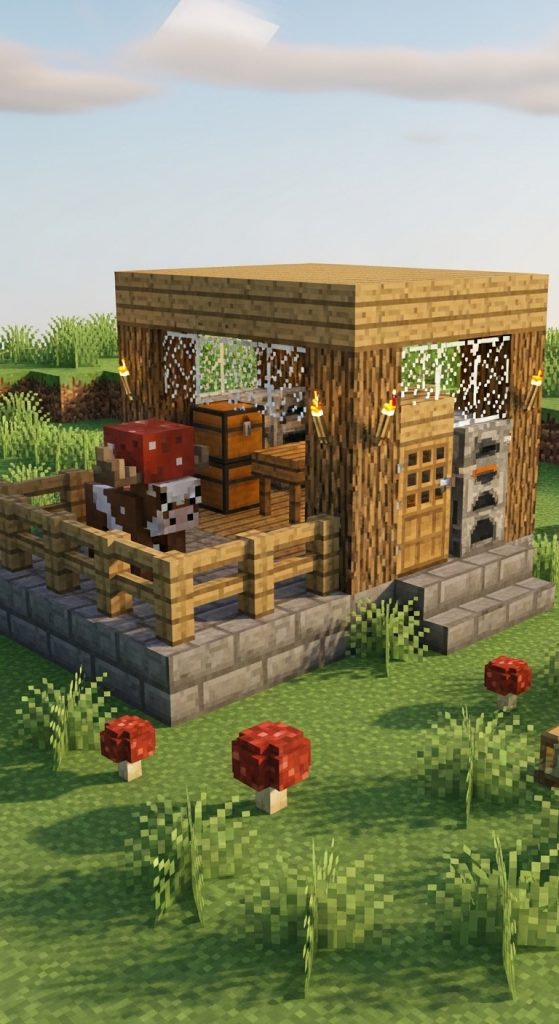
A compact survival mushroom shelter focuses on efficiency and practicality. This design is ideal for early-game survival where space and resources are limited. It combines shelter and animal care into one compact structure.
The shelter should be small but functional, using minimal materials while maintaining visual appeal. Mushroom cows are kept nearby for easy access.
Step-by-Step Guide
Build a small enclosed structure using wood and stone. Add a fenced area attached to the shelter for mushroom cows. Include basic lighting and storage.
Keep design simple and efficient. Add mushrooms and grass for decoration. This creates a practical early-game setup suitable for survival progression.
Idea 10: Artistic Mushroom Sculpture Garden
How to Create
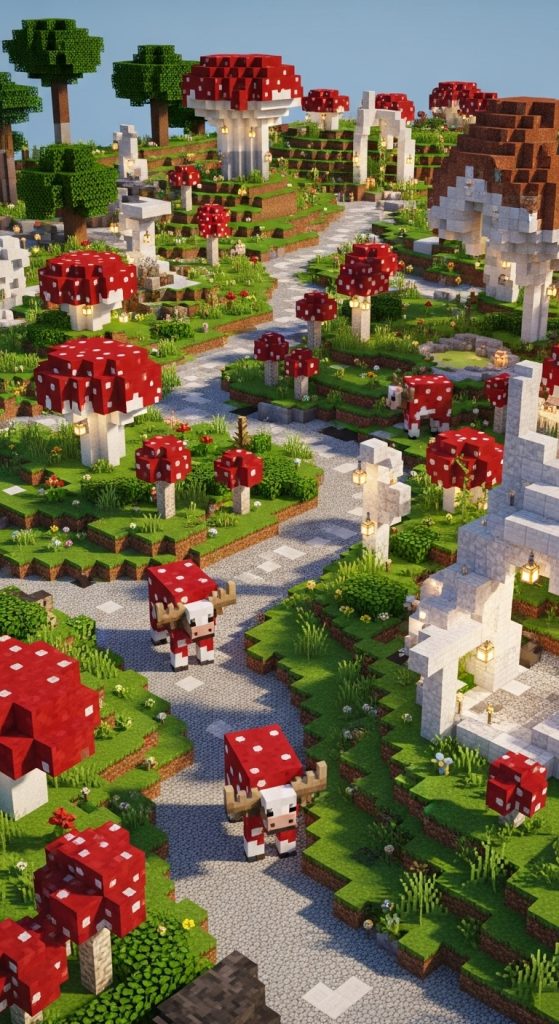
An artistic mushroom sculpture garden transforms the environment into a creative display space. Instead of focusing on utility, this design emphasizes artistic arrangement and visual storytelling. Mushroom cows become part of a living art installation.
The garden should include sculpted terrain, abstract shapes, and decorative arrangements. This idea is ideal for advanced builders who enjoy expressive design.
Step-by-Step Guide
Shape terrain into artistic forms using dirt, stone, and vegetation. Create mushroom-inspired sculptures and abstract layouts. Add pathways for viewing.
Place mushroom cows within designated artistic zones. Use lighting to highlight focal points. This creates a visually rich environment focused on creativity.
Common Beginner Mistakes and How to Avoid Them
Many beginners overcrowd mushroom cow areas with too many decorations, which reduces visual clarity. Another common mistake is ignoring terrain variation, leading to flat and unnatural builds. Players also often use inconsistent materials that break thematic cohesion. To avoid these issues, focus on balance, natural terrain shaping, and consistent block selection. Keep designs simple at first and expand gradually for better structure and visual harmony.
Practical Tips for Better Results
To improve mushroom cow builds, always plan layout before construction. Use natural terrain as a foundation rather than flattening everything. Combine different mushroom types for variety and depth. Lighting should be subtle to maintain atmosphere. Integrating paths helps guide visual flow. These techniques enhance both beginner friendly and advanced creative project builds while maintaining consistency in design.
Styling, Presentation, or Organization Ideas
Good presentation in Minecraft builds depends on structure and flow. Organize mushroom cow areas into zones such as grazing, resting, and decorative sections. Use pathways to separate areas visually. Incorporate elevation changes for depth. Minimalist style works well for modern designs, while layered terrain suits fantasy builds. Maintaining clean organization improves overall aesthetic quality.
Budget or Time Planning
Efficient Minecraft building requires planning resource usage and time allocation. Start with basic materials like wood and dirt before upgrading to decorative blocks. Break construction into phases such as terrain shaping, structure building, and detailing. This prevents overload and ensures steady progress. Beginner friendly builds can be completed quickly, while detailed designs may require longer planning sessions.
Creative Expansion and Advanced Inspiration
Advanced builders can expand mushroom cow ideas into large-scale fantasy ecosystems or integrated base designs. Floating islands, underground cities, or interconnected forest networks can include mushroom cow habitats as part of larger worlds. Combining red and brown mushroom themes with custom terrain generation adds depth. Creative expansion allows transformation from simple enclosures into immersive Minecraft storytelling environments.