10 Minecraft Lush Caves Build Ideas
The lush caves biome in Minecraft offers one of the most visually rich underground environments in the game, making it a powerful source of inspiration for creative building. With glowing berries, moss blocks, dripleaves, and natural water pools, this biome creates a soft, organic atmosphere that feels alive compared to traditional underground spaces. Players often use lush caves as a foundation for immersive underground bases, decorative survival shelters, and aesthetic exploration hubs. This guide explores detailed Pinterest-style ideas designed to help transform lush caves into functional and visually appealing builds.
These ideas focus on combining natural terrain with intentional design. You will learn how to enhance existing cave formations, incorporate natural lighting, and build structures that blend seamlessly into the environment. Each concept is designed to be beginner friendly while still offering depth for more experienced builders. Whether you enjoy survival gameplay or creative building, these concepts help you turn ordinary caves into highly detailed underground worlds with strong visual identity and practical usability.
Why This Idea Is Trending or Useful
Lush cave builds have become popular in modern Minecraft design because they align with the growing trend of natural and organic aesthetics. Instead of constructing highly artificial or rigid structures, players now prefer environments that feel integrated with the terrain. Lush caves naturally support this style due to their soft lighting, layered vegetation, and flowing shapes. This makes them ideal for Pinterest ideas focused on atmospheric home decor, underground gardens, and immersive survival bases.
Another reason for their popularity is accessibility. Lush cave environments do not require complex mods or advanced building techniques to look visually appealing. Even simple adjustments such as adding moss pathways, glow berry lighting, or water accents can dramatically improve the space. This makes them perfect for DIY creative projects, especially for beginners looking for easy yet impressive builds. The combination of aesthetic flexibility and practical survival use has made lush cave builds a consistent trending topic in creative Minecraft inspiration.
Materials and Preparation
Before starting any lush cave build, it is important to gather materials that complement the natural environment. Common materials include moss blocks, moss carpets, stone variants, dripstone, glow berries, vines, oak and birch wood, and glass for subtle modern accents. These materials help maintain the organic theme while allowing flexibility in design. Lighting is also essential, so glowstone, lanterns, or sea lanterns are often used to maintain visibility without breaking the natural atmosphere.
Preparation involves exploring a suitable lush cave system and evaluating its structure. Look for wide open areas, water pools, and vertical space that can support layered builds. Planning is essential because lush caves are irregular in shape, which means each build must adapt to the terrain rather than force symmetry. Marking zones for pathways, farming areas, and living spaces helps maintain organization. This early preparation ensures the final structure feels intentional, balanced, and visually cohesive while still preserving the natural cave aesthetic.
Idea 1: Underground Moss Sanctuary Retreat
How to Create
An underground moss sanctuary focuses on transforming a lush cave section into a peaceful, nature-inspired living space. The core idea is to enhance existing greenery while maintaining the cave’s natural flow. Moss blocks are used to extend green coverage across floors and uneven surfaces, creating a soft, carpet-like foundation. Glow berries provide gentle lighting, while vines and dripleaves add vertical depth. The goal is to create a space that feels like a hidden forest beneath the surface rather than a constructed base. Water pools can be left intact or reshaped into reflective ponds that enhance the calming environment.
To build this sanctuary, start by clearing only unnecessary stone while preserving natural formations. Lay moss blocks across walkable areas and integrate moss carpets for texture variation. Position small seating areas using wood logs or stone slabs to create resting spots. Lighting should remain subtle, so hang glow berries from ceilings or use hidden lanterns behind foliage. Add small pathways that guide movement without strict structure. The key is gradual layering, allowing each natural element to blend into the next. This creates a Pinterest-style aesthetic that feels organic, peaceful, and visually immersive.

Idea 2: Glow Berry Canopy Walkway System
How to Create
A glow berry canopy walkway system focuses on creating suspended paths through lush cave ceilings. This idea transforms vertical cave space into a navigable network of glowing bridges and hanging vegetation. Glow berries act as both lighting and decoration, forming natural light trails that guide movement. Wooden walkways or stone bridges are suspended between cave walls, creating a layered exploration experience. The visual effect resembles a glowing forest canopy inside the cave, making it highly suitable for aesthetic inspiration and creative Minecraft builds.
To construct this system, begin by mapping elevated points along the cave walls where walkways can connect. Build bridges using wood planks or stone slabs depending on desired style. Attach glow berries above and below pathways to create layered illumination. Add vines and dripleaves along edges to soften structural lines. Safety railings can be built using fences or walls to maintain functionality in survival mode. The combination of light and vertical movement creates a dynamic and engaging design that enhances exploration while maintaining a natural aesthetic.

Idea 3: Hidden Crystal Storage Cavern
How to Create
A hidden crystal storage cavern is designed as a functional storage area disguised within the lush cave environment. The concept focuses on blending storage systems into natural formations so they appear like part of the cave itself. Crystal-inspired design is achieved using amethyst blocks, glass accents, and glowing lighting elements. Storage chests are hidden behind moss walls or embedded into stone recesses, maintaining a clean visual flow. The goal is to make organization feel like an extension of the environment rather than a separate structure.
To build this storage cavern, carve out a medium-sized chamber within the cave while preserving surrounding vegetation. Install chest systems along walls and cover them with trapdoors or moss panels. Use amethyst clusters and tinted glass to create focal points that resemble crystals growing from the cave. Lighting should remain soft and indirect, using concealed lanterns or glow berries. Pathways between storage sections can be marked with moss carpets for navigation. This setup ensures both practicality and aesthetic appeal, making it ideal for survival-based lush cave builds.
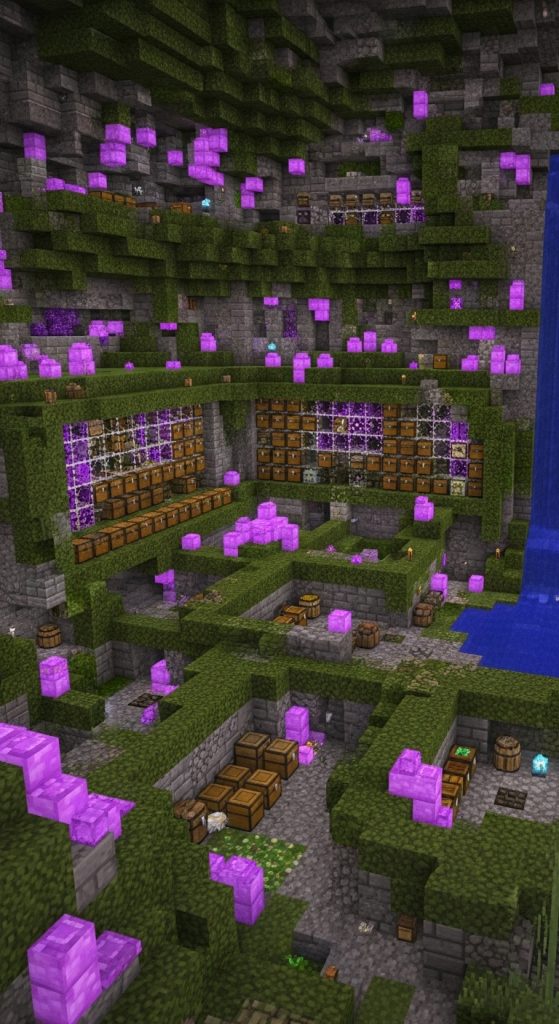
Idea 4: Underground Waterfall Meditation Chamber
How to Create
An underground waterfall meditation chamber emphasizes calmness through flowing water and natural acoustics. The design uses existing cave water sources or artificially created waterfalls to form a central focal point. The sound and movement of water create a relaxing environment that feels separate from the rest of the cave. Moss, stone, and wood are used to frame the chamber, ensuring the space feels naturally formed. This idea is particularly effective for players who enjoy atmospheric and immersive Minecraft environments.
To construct the chamber, identify a vertical drop or create a controlled water flow from higher cave levels. Shape the surrounding area into a semi-open room with seating platforms made of stone slabs or wood logs. Add moss blocks around the water base to soften transitions. Lighting should remain minimal, with glow berries or hidden lanterns highlighting water movement. Small decorative pools can be added to reflect light and enhance symmetry. The result is a peaceful, nature-integrated space suitable for relaxation and visual inspiration.

Idea 5: Bioluminescent Farming Grove
How to Create
A bioluminescent farming grove combines functionality with aesthetic lighting by integrating crop farming into a glowing cave environment. The concept uses glow berries and other natural light sources to create a self-sustaining underground farm. Crops are arranged in organic patterns rather than rigid grids, blending into the cave’s natural shape. Moss pathways and water channels support farming efficiency while maintaining visual harmony. This design is ideal for survival gameplay with a strong focus on aesthetic appeal.
To build this grove, flatten select areas within the lush cave while preserving surrounding vegetation. Install water irrigation channels for crops and surround them with moss blocks for texture consistency. Use glow berries to provide ambient lighting instead of torches. Wooden fences or stone borders can define planting zones without breaking natural flow. Include seating or observation areas for visual balance. This creates a productive yet visually immersive farming space that aligns with modern Pinterest ideas for creative Minecraft builds.

Idea 6: Hanging Vine Cliff Housing
How to Create
Hanging vine cliff housing focuses on building suspended homes along cave walls using vines as natural support elements. The design creates the illusion of living structures growing out of the cave itself. Wooden platforms are attached to vertical surfaces and connected with vine networks that enhance both stability and aesthetics. This concept emphasizes vertical living and is ideal for players who enjoy unconventional building layouts.
To construct these homes, identify tall cave walls with multiple elevation levels. Build small wooden platforms anchored into the stone and extend them outward slightly. Attach vines along the sides to create natural hanging support visuals. Add compact interiors with essential survival features such as beds, crafting tables, and storage. Lighting should be integrated using lanterns placed under platforms. This creates a layered vertical settlement that feels integrated into the lush cave environment.
Idea 7: Ancient Ruins Overgrown Base
How to Create
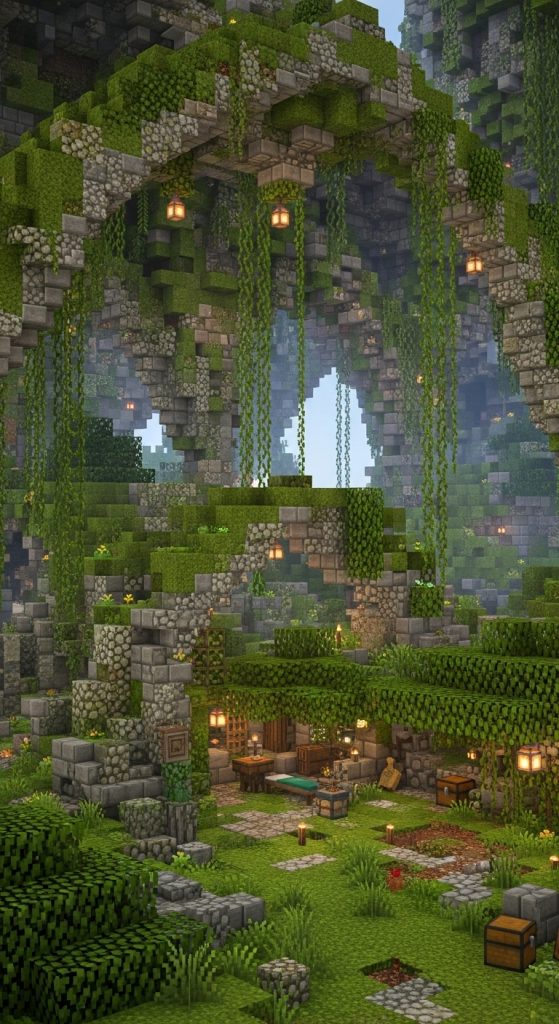
An ancient ruins overgrown base transforms a lush cave into a forgotten civilization aesthetic. The design uses broken stone structures, moss overgrowth, and partially collapsed architecture. The idea is to simulate a long-abandoned underground city reclaimed by nature. This creates a strong storytelling element within the build, making it ideal for immersive Minecraft inspiration.
To create this base, construct fragmented stone walls and arches within the cave. Intentionally leave gaps and irregular shapes to simulate decay. Cover sections with moss blocks, vines, and dripstone to show natural reclamation. Hidden rooms can serve as functional base areas while blending into ruins. Lighting should remain subtle, embedded within structures. This approach produces a cinematic environment that feels both ancient and naturally integrated.

Idea 8: Glow Pool Reflection Garden
How to Create
A glow pool reflection garden focuses on using water pools as visual centers surrounded by glowing vegetation. The design emphasizes symmetry and reflection, making water surfaces the main aesthetic feature. Glow berries and lanterns enhance reflections, creating a soft illuminated environment. This idea is highly suitable for decorative builds and peaceful underground spaces.
To build this garden, locate or create still water pools within the lush cave. Surround them with moss, flowers, and stone accents. Position glow berries above water surfaces to create reflection patterns. Add stepping stones or small bridges for navigation. Seating areas can be placed around the edges for viewing. The combination of light and reflection creates a visually balanced and calming environment.

Idea 9: Compact Survival Lush Cave Base
How to Create
A compact survival base integrates essential Minecraft functions into a small lush cave area. The focus is on efficiency, organization, and natural blending. Instead of large structures, the design uses multi-functional spaces embedded into cave walls. This ensures minimal disruption to the environment while maintaining full survival utility.
To construct this base, select a small enclosed cave section. Install essential stations such as crafting, storage, and sleeping areas along natural walls. Use moss and stone to integrate furniture into the environment. Lighting should be hidden to preserve atmosphere. Pathways connect each function smoothly. This creates a highly efficient base suitable for survival gameplay.

Idea 10: Vertical Jungle Cave Tower
How to Create
A vertical jungle cave tower extends upward through lush cave openings, combining underground and surface aesthetics. The structure uses layered platforms connected by ladders or vines, creating a vertical progression system. It blends jungle-inspired design with cave vegetation for a hybrid architectural style.
To build it, locate a tall cave shaft and construct stacked platforms at intervals. Each level can serve different purposes such as farming, storage, or living space. Use vines, wood, and moss to connect levels visually. Lighting should be distributed evenly to maintain visibility. This creates a striking vertical structure that merges natural and built environments.

Common Beginner Mistakes and How to Avoid Them
One common mistake in lush cave builds is overusing artificial blocks that break natural immersion. Excess stone bricks, overly structured walls, or bright unnatural lighting can reduce aesthetic quality. Another issue is flattening too much terrain, which removes the organic flow that makes lush caves visually appealing. Beginners also often overcrowd spaces with decorations, which can make builds feel cluttered instead of immersive.
To avoid these issues, focus on enhancing rather than replacing natural terrain. Use moss, vines, and subtle lighting to maintain consistency. Allow irregular shapes to guide building placement instead of forcing symmetry. Keep decorations intentional and spaced to preserve openness. This approach ensures the build remains balanced, visually appealing, and aligned with modern Pinterest-style Minecraft inspiration.
Practical Tips for Better Results
Improving lush cave builds often comes down to layering and lighting control. Use multiple vegetation types together to create depth instead of relying on a single block type. Combine moss, vines, glow berries, and leaves to build richer environments. Lighting should always feel indirect, as harsh lighting reduces the natural atmosphere.
Another effective improvement technique is elevation variation. Even small height differences in flooring or platforms can significantly enhance realism. Mixing natural and constructed elements also improves visual flow. These methods help transform simple caves into detailed creative projects suitable for aesthetic Minecraft inspiration.
Styling, Presentation, or Organization Ideas
Styling a lush cave build requires maintaining visual harmony between natural and constructed elements. Use moss pathways to guide movement naturally instead of rigid corridors. Group functional areas into thematic zones such as farming, storage, or relaxation spaces. This helps maintain organization without disrupting aesthetics.
Decorative balance is essential. Avoid overloading any single area with too many details. Instead, distribute visual elements evenly across the cave. Use water, vegetation, and lighting as anchoring design components. This creates a cohesive environment that feels both functional and visually appealing.
Budget or Time Planning
Lush cave builds can be completed efficiently with proper planning. Start with basic materials such as moss and wood before expanding into decorative elements. Prioritize core functional areas first, then gradually enhance aesthetics. This staged approach reduces resource pressure and improves workflow.
Time efficiency improves when sections are built independently. Focus on one area at a time rather than attempting to complete the entire cave at once. This allows for better control over design consistency. Even small builds can look highly detailed when planned correctly.
Creative Expansion and Advanced Inspiration
Advanced lush cave builds often involve integrating redstone systems or hidden pathways. Automated lighting systems can enhance atmosphere changes between day and night cycles. Secret rooms behind moss walls add exploration depth. Expanding vertically into multiple cave layers also increases complexity and visual interest.
Another advanced direction is thematic storytelling. Designing caves as ancient civilizations, magical ecosystems, or underground cities adds narrative depth. Combining multiple ideas from this guide can result in highly detailed Minecraft environments suitable for long-term creative projects.